

GINGER RILEY MUNDUWALAWALA
MARKET ANALYSIS
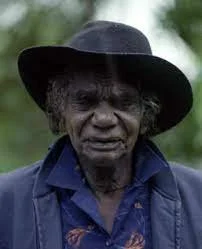
Art Market capriciousness might seem to be exemplified well in the case of Ginger Riley. He reached unprecedented status as an artist just prior to his death in 2002, the year in which his now third record price was achieved at Sotheby's with the 161 x 172.5cm canvas, Untitled (Limmen Bight Country). His unique and colourful style established itself on the market as early as 1997, but this stellar sale of $100,375 set a high benchmark, which despite intervening years, was not exceeded until 2024 when two huge canvasses sold for twice this amount.
A record price that took over twenty years to shift could indicate an artist that has fallen out of favour but Riley's average price during the earlu=y years of the millennium was a very impressive $27,393 per work and interest in his work remained consistent despite the market malaise post GFC (2008-2014).
As would be expected, Riley’s large canvases fetch the highest prices, especially those of Limmen Country, in which the sea eagle Ngak Ngak is present along with the Rainbow Serpent. Smaller canvases and boards sell for $10,000-25,000. The one exception was an early career 38 x 43 cm work on plywood, exhibited in the artist’s first exhibition at William Mora Gallery, around which Ginger had screwed plastic moulding found in the local dump as a frame. Perhaps its quirky nature and the charm of the image ensured that this work (Limmen Bight Country, 1989), illustrated on the cover of the catalogue for Lawson-Menzies May 2005 auction, became his top-selling small work when sold for more than 2 1/2 times its top estimate at $31,200.
Late in his career in 1999, Ginger Riley participated in a workshop and produced a significant body of work outside of his relationship with his agent, Beverley Knight. During the well-documented workshop, many images similar to those in the National Gallery of Victoria retrospective catalogue were commissioned. Only one of these works has ever been offered for sale due to an ongoing dispute with the artist’s estate. Limmen Bight-River Country 1999, one of the largest of these 'unauthorised' canvases (285.5 x 197 cm), was offered at Deutscher~Menzies, 2000 ‘s auction with a presale estimate of $40,000-50,000 (Lot 84). It sold for a mere $32,825. These ‘unauthorised’ works, held in several private collections nationally, may be offered for sale from time to time, but they are unlikely to sell in Tier I auction houses or for prices commensurate with those authenticated by the artist’s estate. Moreover, it is unlikely that copyright permission allowing the reproduction of these images in auction catalogues will be granted by the estate.
However, Riley's clearance rates remain relatively low, hovering just below 60%,indicating some lack of interest in his early career and his smaller works. 2012 was a stellar year for the artist overall, in which he was the 8th best-performing artist despite his overall position as the 29th most successful of the entire movement at that time. This was followed by another pause and general market doldrums before another upsurge of interest began in 2020.
2021 saw his yearly total sales record at $349,039 though this included a new record price paid at Bonhams for My Mothers Country, 1996, measuring 195 x395 cms. Then, In March 2024, Christmas at Old Roper River Mission, 1995-96, measuring 129 x 257.5 cms sold at Deutscher and Hackett for $245,455, supplanting this record.
Ginger Riley was a good artist but not a great one. He consistently produced paintings of unique character. In a career marked by occasional brilliance, he created many eye-catching works. Just as he challenged the very nature of our perception of Aboriginal art during his lifetime, he continues to do so long after his death. Should his results continue on the trajectory set during the last 5 years, his overall standing in the history of the movement should eventually see him settle to a position around 30, and his name remain a familiar one in the annals of art history.
Authors: Adrian Newstead & Sophie Pearce