Abie Loy Kemarre
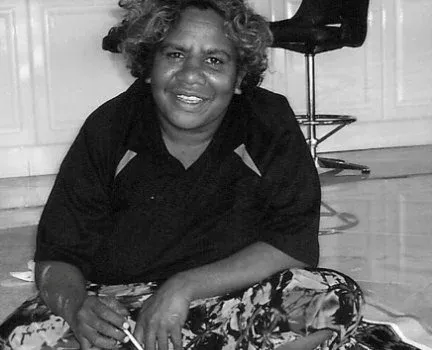
AAMI artistb. 1972
- Region
- Eastern Desert
- Community
- Utopia
- Language
- Eastern Anmatyerre
Region: Eastern Desert · Community: Utopia · Language: Eastern Anmatyerre
Born in February 1972, the young Eastern Anmatyerr artist Abie Loy Kemarre comes with an impeccable artistic pedigree. Granddaughter of Kathleen Petyarre, who has also been her artistic mentor, Abie is also closely related to a host of other famous women artists who are well-known names in the Australian art world. Among Abie Kemarre’s relatives who are also painters are Gloria Petyarre, Ada Bird Petyarre and the late Emily Kngwarreye, to name but a few.
Yet despite being part of an impressive multi-generational artistic dynasty – the Indigenous equivalent of being a member of the Boyd family – Abie Loy’s work stands out on its own merits. Kemarre’s work has not come to public attention because she is artistically well connected – far from it, in a nutshell, Abie Loy Kemarre is simply the most talented and exciting young Indigenous artist – or for that matter, Australian artist – to emerge for some years.
As a young child in the late 1970s and early 1980s at remote Utopia, almost three hundred kilometres north east of Alice Springs in the Northern Territory, Abie closely observed her older women relatives working with batik. As a result, Abie Kemarre was still very young when she began to nurture a strong ambition to succeed as an artist:
…When I was a little girl I would watch my grandmother Kathleen Petyarre and all the other mob doing the silk, making the silk. I began learning doing silk with Kathleen. Kathleen was also a schoolteacher at our school, Utopia School…When I was a very young child my grandmother told me she wanted me to be [an] artist – I love painting and so I thought it over and decided to be an artist then. Ever since those days of watching closely those ladies doing silk I wanted to be an artist too…When my grandmother Kathleen turned to painting [in the 1980s], I watched that closely too, and ever since, I’ve always been an artist.
Under the sometimes-formidable guidance of her grandmother, Abie Loy’s talent has blossomed. For such a young person, she is a highly disciplined artist, often working and reworking ideas many times until she is satisfied with the outcome. Not only does Kemarre possess a strong technical command of all aspects of painting, including line, intrinsic form and surface quality, use of colour, and overall balance of composition, but, importantly, Abie Loy Kemarre is also willing to experiment with all of these elements. Kemarre is experimental in her work to the extent permitted by Eastern Anmatyerr law, of which she is deeply observant. Artistic experimentation is a conscious process for Kemarre and has resulted in some of her best and most recent work, examples of which are included in this exhibition.
Under Eastern Anmatyerr Law, Abie Loy Kemarre has the right to portray several Dreamings. These include the Bush Hen (Turkey) Dreaming and Bush Leaf Dreaming.
The Bush Leaf Dreaming is an inheritance from Abie’s father’s side. The bush leaf grows in a swamp near some sandhills close to the Utopia region in Abie’s grandfather’s country and it is known for its wonderful curative properties. These bush leaves are able to cure a whole range of illnesses including colds, headaches, and sores.
The Bush Leaf, as a Dreaming, is closely associated with women, and is a shape-shifter, a state-changer, possessing the ability to transform herself from her bush leaf-form into a woman and back into a leaf again. The aspect of the Bush Leaf Dreaming that Abie paints belongs to women only.
The accompanying Dreaming narrative contains a good deal of information about the precise locations of this leaf, in arid parts of the country.
The bush leaf is painfully shy. When people touch the leaves or pick this leaf she dies of embarrassment, because of the shame of being touched. Yet magically, although the leaf withers under the gaze and touch of people who covet the leaves of this plant, she has the capacity to regenerate herself and brings herself back to life after.
This story not only discloses some of the properties of this fascinating plant, but acts as a metaphor for the artist herself: a young woman who in some circumstances is painfully shy, but whose artistic talent is potentially a source of great fecundity.
© Adrian Newstead
Christine Nicholls, Flinders University, South Australia.
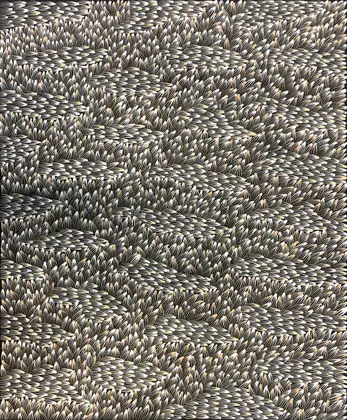
Abie Loy Kemarre
Bush Medicine Leaf, 2026
synthetic polymer paint on canvas
92 x 76 cm
$2,750
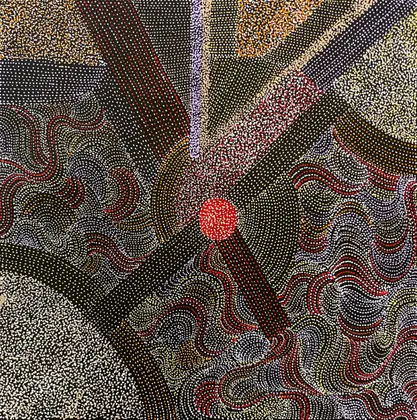
Abie Loy Kemarre
Bush Turkey Design, 2026
synthetic polymer paint on canvas
62 x 62 cm
$1,500
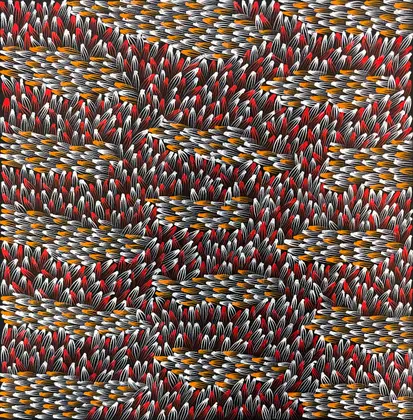
Abie Loy Kemarre
Bush Medicine Leaf, 2026
synthetic polymer paint on canvas
62 x 61 cm
$1,500
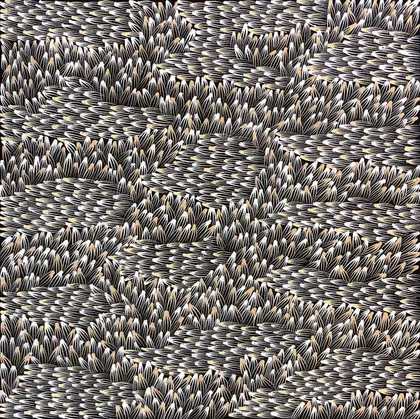
Abie Loy Kemarre
Bush Medicine Leaf, 2026
synthetic polymer paint on canvas
62 x 62 cm
$1,500
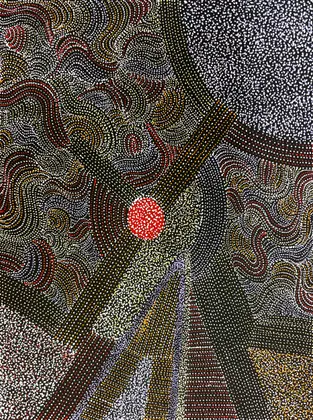
Abie Loy Kemarre
Bush Turkey Design, 2026
synthetic polymer paint on canvas
61 x 46 cm
$1,100
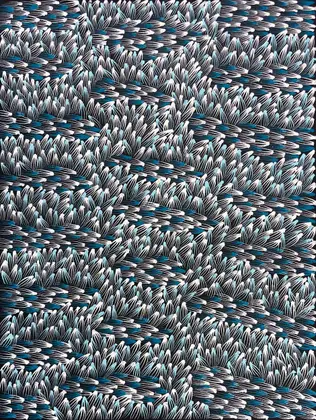
Abie Loy Kemarre
Bush Medicine Leaf, 2026
synthetic polymer paint on canvas
61 x 46 cm
$1,100
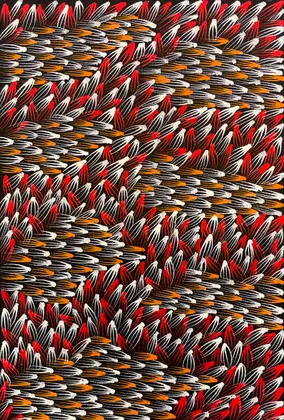
Abie Loy Kemarre
Bush Medicine Leaf, 2026
synthetic polymer paint on canvas
45 x 30 cm
$600
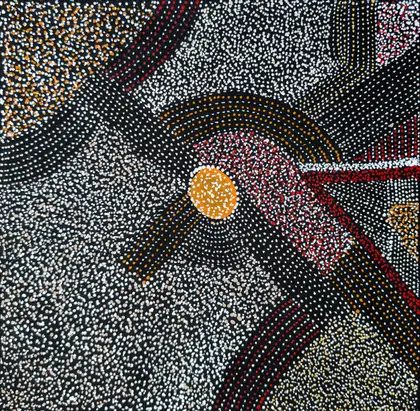
Abie Loy Kemarre
Bush Turkey Design, 2026
synthetic polymer paint on canvas
30 x 30 cm
$400
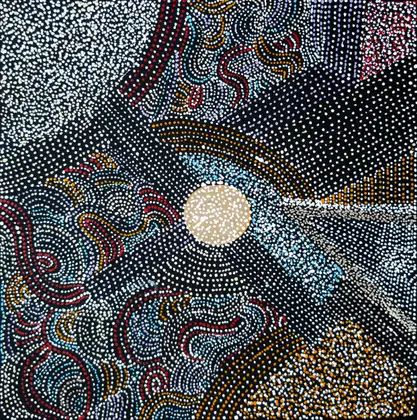
Abie Loy Kemarre
Bush Turkey Design, 2026
synthetic polymer paint on canvas
30 x 30 cm
$400
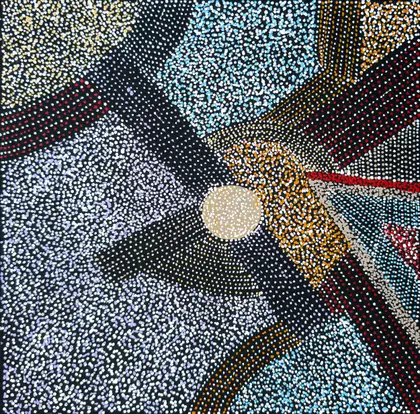
Abie Loy Kemarre
Bush Turkey Design, 2026
synthetic polymer paint on canvas
30 x 30 cm
$400
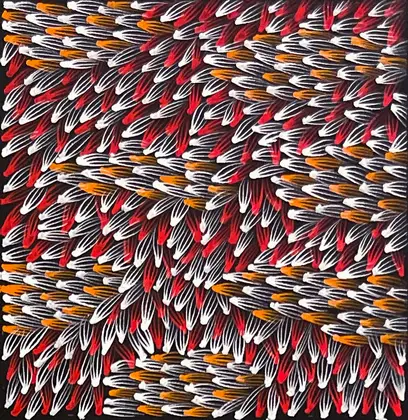
Abie Loy Kemarre
Bush Medicine Leaf, 2026
synthetic polymer paint on canvas
30.5 x 30 cm
$400
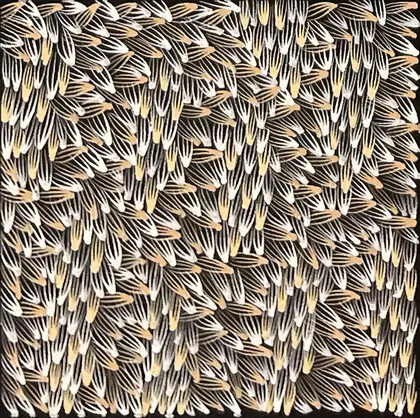
Abie Loy Kemarre
Bush Medicine Leaf, 2026
synthetic polymer paint on canvas
30.5 x 30 cm
$400
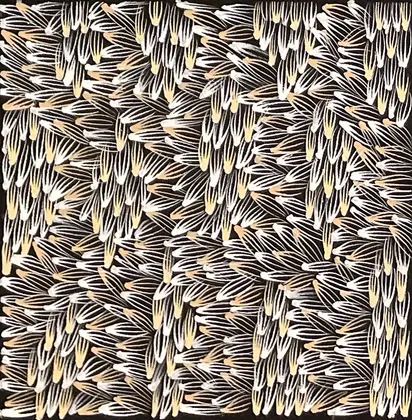
Abie Loy Kemarre
Bush Medicine Leaf, 2026
synthetic polymer paint on canvas
30.5 x 30 cm
$400
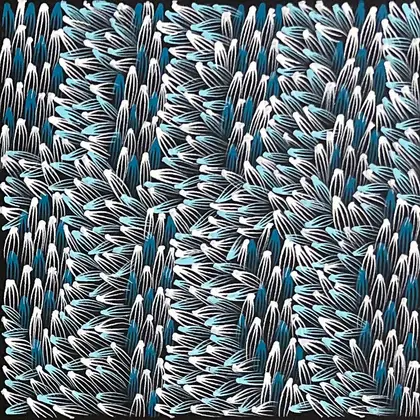
Abie Loy Kemarre
Bush Medicine Leaf, 2026
synthetic polymer paint on canvas
30.5 x 30.5 cm
$400
Rank #75Cumulative AAMI 3.89
Annual AAMI rating by year — hover or tap a bar for the exact figure.
How the AAMI rating is calculated
The AAMI (Aboriginal Art Market Index) measures an artist’s auction performance each year. Each annual rating combines the value of works sold (total sales and clearance rate), the number of works offered, and the average price achieved — with adjustments that temper thin trading years and a rising annual price threshold, so results stay comparable over time. The yearly ratings are added together into an artist’s Cumulative AAMI score, which determines their rank in the index.