Bill Whiskey Tjapaltjarri
AAMI artistc.1920 – 2008
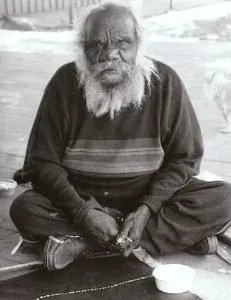
- Region
- Western Desert
- Community
- Amunturrngu (Mount Liebig, Amunturrungu, Watiyawanu, New Bore)
- Language
- Pitjantjatjara
Region: Western Desert · Community: Amunturrngu (Mount Liebig, Amunturrungu, Watiyawanu, New Bore) · Language: Pitjantjatjara
Pitjantjatjara elder Bill Whiskey began creating his finely dotted, colourful canvases in 2004 when already in his mid 80s. He was born in near Pirrulpakalarintja outstation at Pirupa Alka, 130 km south of the stunning mountains and rock formations of Kata Juta (the Olgas) and, in search for food and water, moved with his family to Uluru (Ayers Rock) during his adolescence. Whiskey returned to his tribal land with his family after their first contact with white people ended in conflict, and continued to live a nomadic tribal existence throughout his childhood.
By the time he was a young man, his father and a number of his immediate family had passed away and he joined a group of people who made the journey to Haasts Bluff mission, about 250 km to the northeast. Due, in part, to his earlier experience, he was afraid of white people, but after a restive period during which he continued his wanderings, he eventually settled at the mission and married Colleen Nampitjinpa, a Luritja woman with whom he eventually had five children.
He worked at Areyonga, being paid in rations for labouring, clearing land and building as well as mustering and cooking but eventually returned to Haasts Bluff until, with Colleen and their children, he eventually moved to the outstation of Amunturungu (Mt. Liebig) during the 1980’s. Over the following decades Bill and Colleen’s renown as skilled healers, or ngangkari, spread far and wide and they became greatly respected for their traditional knowledge and authority. Despite the connotations inherent in his name he was actually a non-smoking teetotaller who initially came to be called Whiskers due to his long flowing white beard and, no doubt due to his own wry humour, the name eventually evolved into Whiskey.
The Pitjantjatjara were amongst the last of the Central and Western Desert people to embrace the Desert painting movement. For the most part they had resisted the move to painting their sacred Dreaming stories on canvas for public display and sale until the 1990’s. Whiskey himself did not begin painting until the last four years of his life and, despite his age, was able to complete a number of large canvases amongst an oeuvre of no more than 200 works.
His subjects included his early travels and also the mythic battle related in the Cockatoo Dreaming that occurred at his birthplace, Pirupa Alka. This ancestral story involves three birds: the white cockatoo, his friend the eagle and the aggressive black crow that attacked the cockatoo in order to steal his witchetty grubs. During a terrible battle white feathers were scattered about and the landscape became indented by the entangled birds crashing to the ground several times. Subterranean streams filled these impressions with water and a circular amphitheatre was created by the sweep of wings. The badly wounded cockatoo was helped by his friend the eagle, which chased the crow away and brought scraps of kangaroo meat for the injured bird to eat. From a large protruding rock, Katamala Cone, the eagle still watches the area protectively while a large, central, glowing white rock signifies the fallen cockatoo, still sipping the life-giving water from the sacred pools. Colourful blues, yellows, reds and greens, always tempered by cockatoo white, represent the wildflowers that grow in profusion after rain.
In keeping with the depiction of Dreaming stories throughout the Western Desert, the mythic and numinous is inherent within the sacred geography. By implication human survival in the harsh desert environment has been due to the knowledge embodied by ancient wisdom passed down through the millennia. Bill Whiskey’s bold bright painting style reflected his indomitable spirit. At 80 years of age he was widely renowned as a powerful healer and keeper of sacred knowledge. His paintings, the first to depict the major Dreaming story and the creation of major sites throughout his country, are imbued with authority and steeped in traditional knowledge.
© Adrian Newstead
Grishin, Sasha, Modern, Contemporary Australian and Important Aboriginal Art, Lawson Menzies Art Auction Catalogue, September, Sydney 2008
McCulloch Childs, E. and Gibson, R. New Beginnings, Classic Paintings from the Corrigan Collection of 21st Century Art, McCulloch and McCulloch, Australian Art Books, 2008
Exhibitions
- Current Hang1 October – 31 October 2026
- Bill Whiskey TjapaltjarriFebruary 2024
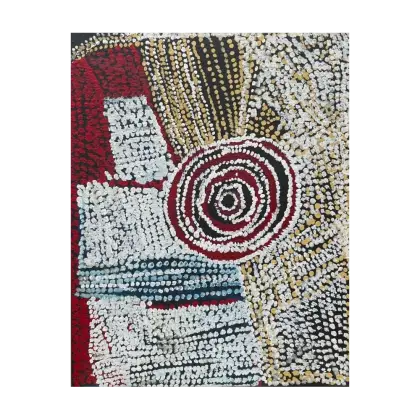
Bill Whiskey Tjapaltjarri
Rockholes near the Olgas
synthetic polymer paint on canvas board
41 x 51 cm
$5,700
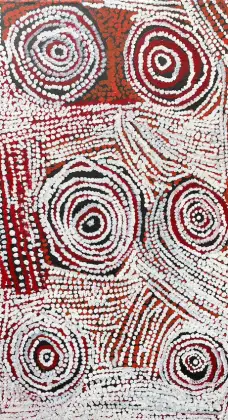
Bill Whiskey Tjapaltjarri
Rock Holes Near the Olgas
synthetic polymer paint on canvas board
51 x 40.5 cm
$4,500
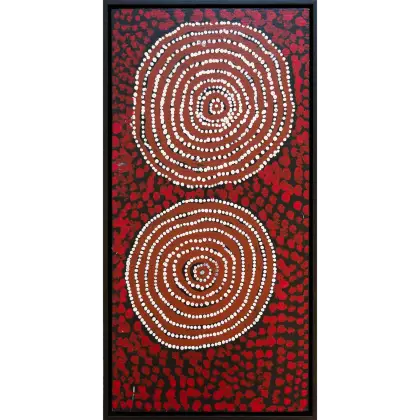
Bill Whiskey Tjapaltjarri
Untitled, -
synthetic polymer paint on canvas board
25.4 x 50.8 cm
$4,000
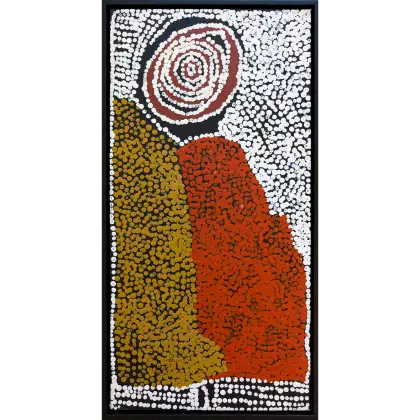
Bill Whiskey Tjapaltjarri
Untitled, -
synthetic polymer paint on canvas board
25.4 x 50.8 cm
$3,500
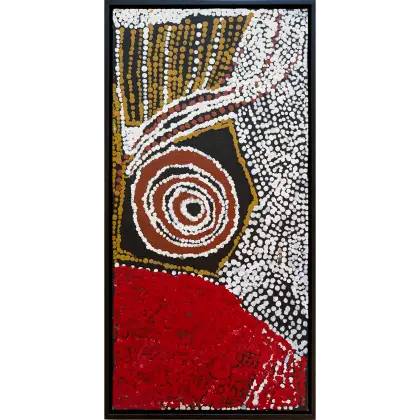
Bill Whiskey Tjapaltjarri
Untitled, -
synthetic polymer paint on canvas board
25.4 x 50.8 cm
$3,500
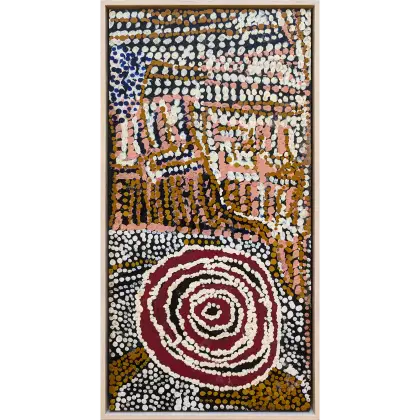
Bill Whiskey Tjapaltjarri
Untitled, -
synthetic polymer paint on canvas board
25 x 45 cm
$3,500
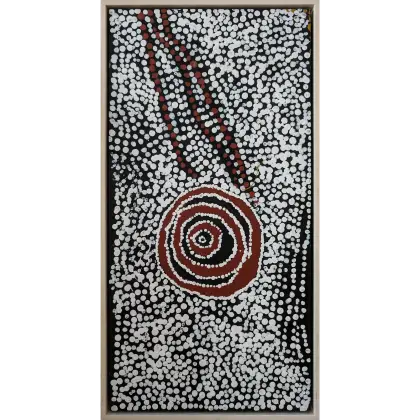
Bill Whiskey Tjapaltjarri
Untitled
synthetic polymer paint on canvas board
25.4 x 50.8 cm
$3,500
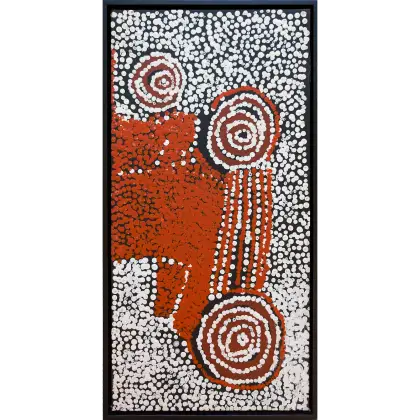
Bill Whiskey Tjapaltjarri
Untitled, -
synthetic polymer paint on canvas board
25.4 x 50.8 cm
$3,500
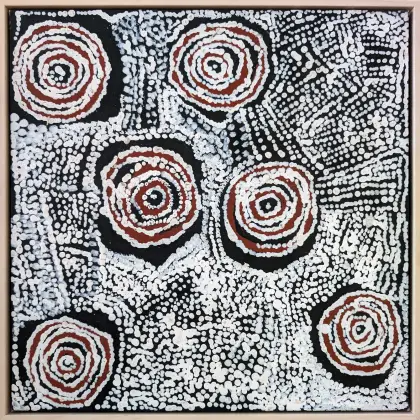
Bill Whiskey Tjapaltjarri
Untitled
synthetic polymer paint on canvas board
40.6 x 40.6 cm
$3,000
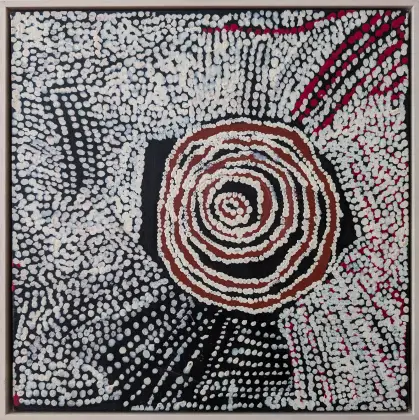
Bill Whiskey Tjapaltjarri
Untitled
synthetic polymer paint on canvas board
40.6 x 40.6 cm
$3,000
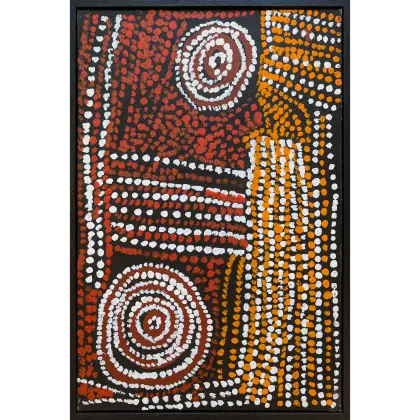
Bill Whiskey Tjapaltjarri
Rockholes Near the Olgas, 2008
synthetic polymer paint on canvas board
25.4 x 38.1 cm
$2,800
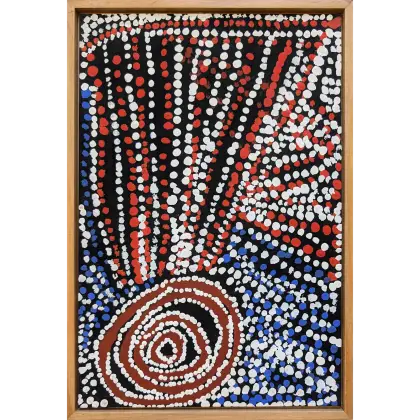
Bill Whiskey Tjapaltjarri
Untitled, -
synthetic polymer paint on canvas board
25.4 x 38.1 cm
$2,000
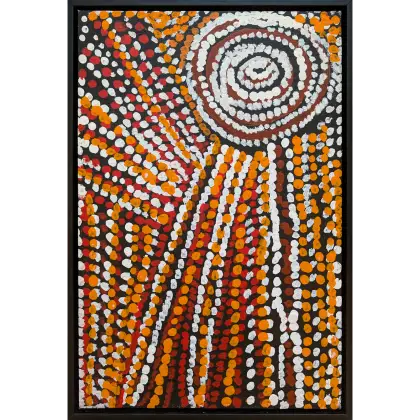
Bill Whiskey Tjapaltjarri
Untitled, -
synthetic polymer paint on canvas board
25.4 x 38.1 cm
$2,000
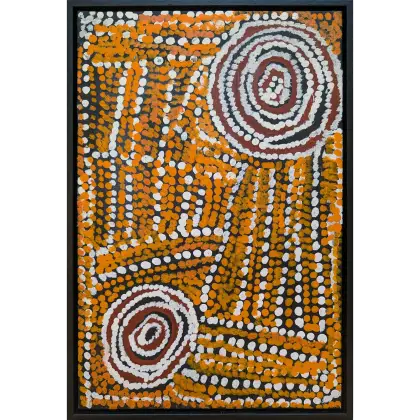
Bill Whiskey Tjapaltjarri
Untitled
synthetic polymer paint on canvas board
25.4 x 38.1 cm
$2,000
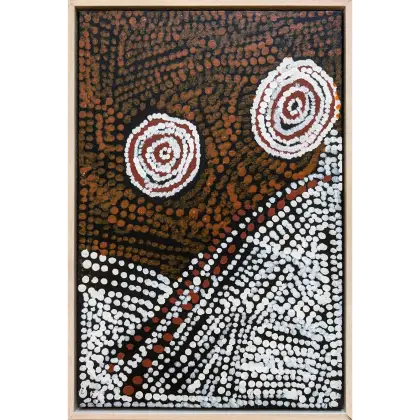
Bill Whiskey Tjapaltjarri
Untitled, -
synthetic polymer paint on canvas board
25.4 x 38.1 cm
$2,000
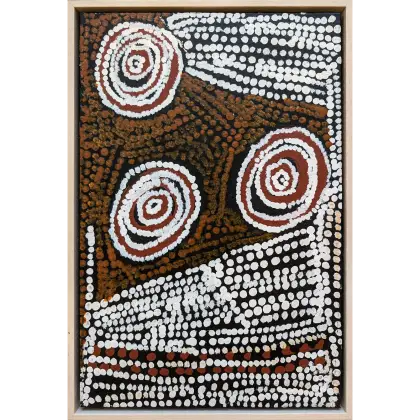
Bill Whiskey Tjapaltjarri
Untitled, -
synthetic polymer paint on canvas board
25.4 x 38.1 cm
$2,000
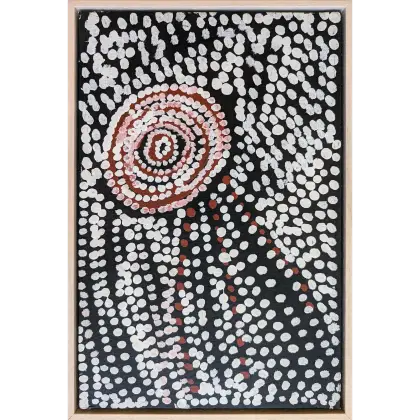
Bill Whiskey Tjapaltjarri
Untitled, -
synthetic polymer paint on canvas board
25.4 x 38.1 cm
$2,000
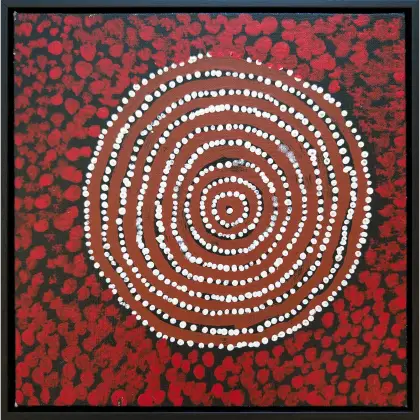
Bill Whiskey Tjapaltjarri
Untitled, -
synthetic polymer paint on canvas board
30.4 x 30.4 cm
$1,200
Rank #32Cumulative AAMI 11.90
Annual AAMI rating by year — hover or tap a bar for the exact figure.
How the AAMI rating is calculated
The AAMI (Aboriginal Art Market Index) measures an artist’s auction performance each year. Each annual rating combines the value of works sold (total sales and clearance rate), the number of works offered, and the average price achieved — with adjustments that temper thin trading years and a rising annual price threshold, so results stay comparable over time. The yearly ratings are added together into an artist’s Cumulative AAMI score, which determines their rank in the index.