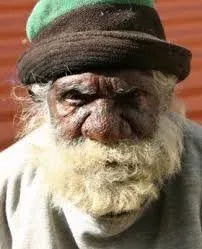
Kudditji Kngwarreye
AAMI artistc.1928 – 2017
- Region
- Eastern Desert
- Community
- Utopia
- Language
- Anmatyerr (Anmatyerre) – Eastern Anmatyerre
Region: Eastern Desert · Community: Utopia · Language: Anmatyerr (Anmatyerre) – Eastern Anmatyerre
Kudditji Kngwarreye was born about 1928 at Alhalkere at Utopia Station, located about 270 kms northeast of Alice Springs. In his younger life, he worked throughout the Central Desert, travelling widely as a stockman, and working in mineral and gold mines. A custodian for ceremonial sites located in his country at Utopia Station, many of his paintings refer to sites at Boundary Bore, where men's initiation ceremonies are performed. He began painting his precisely dotted Emu Dreaming paintings, featuring ranks of coloured roundels and other 'hieroglyphs' on a chequered or dotted background, in 1986. Kudditji was the younger brother of renowned artist Emily Kame Kngwarreye. He painted only sparingly until his sister’s death in 1996 after which he experimented with a number of gestural styles involving looser brushstrokes and schematic composition. However the demand for his earlier, male iconographic style saw Kudditji return to it, and it was not until 2003 that he began to exhibit the saturated patchwork colour paintings with which he is principally associated today.
His current renown rests almost exclusively upon colour field works that are invariably entitled My Country. In these, fields of colourful textured stippling are structured into a geometric architecture of squares and oblongs. Like the works of his famous sister, they have been compared in style with that of several of the greatest international contemporary artists, such as Mark Rothko and Philip Guston in particular. (When Kudditji’s work appeared for auction at the Deutcher~Hackett 2007 sale, this comparison was employed by one commentator to note the record-setting sale for a post-WWII work of Rothko’s-White Center, Yellow, Pink and Lavender on Rose, at Sotheby’s in New York) (SMH May 19 2007).
Though parallels between the abstract expressionists and Indigenous artists like Kudditji may seem to labour the point of the latter’s contemporary credibility, the underlying sentiment is valid. It does demand equal respect. Yet there are far more intimate parallels to be drawn between his style and that of Emily. Certainly, both were masters of colour. However, the geometric composition of Kudditji’s work has a more formal feel than either the energetic linear or ‘dump dump’ brush strokes of his sister. In this regard, Kudditji rarely strays from a strictly Aboriginal male aesthetic into the wild abandon of female gestural work. There is a clear ‘intention’ as he lays down the quilted structures, no matter how loose and haptic the grid may be.
These works still resonate strongly with his earliest ones. They still fall within the distinctive Anmatyerre male convention of depicting men’s ceremonial sites and, in Kudditji’s case, Emu Dreamings. While his earlier works were far more conventional, they were well received, and Kudditji made his living as an artist after haven given up life as a stockman. A move away from this style at first proved unprofitable, which prompted a return to his tried and trusted style. However, in time, the successful outcome of years of experimentation saw him gain national attention and, later, international renown.
Emily, Kudditji and other Utopia painters like Gloria Petyarre, Minnie Pwerle, Barbara Weir and others, who paint quickly with gestural or stippled brushwork, have one important thing in common. They needed to paint a lot of work over an extended period in order to develop a truly unique and successful style. This is interesting in the current context where ‘art centre provenanced’ works are considered by many to have supreme provenance. Artists such as these could never have emerged from official art centres with their financial restraints and the requirement to cater to the needs of large numbers of individuals. It has only been through unfettered freedom of expression, and profligate creativity, that their careers have flourished to the point where they are amongst the most successful of all Aboriginal artists.
In Kudditji Kngwarreye’s case, his works have been included in countless group shows and no less than 10 solo exhibitions since 2000. Far from diminishing his career, the fact that hardly a retailer in the country would not be able to find a canvas or two somewhere in the stockroom to show a prospective client has only served to enhance his reputation and standing.
© Adrian Newstead
Exhibitions
- The Antoni and Belinda Cipa Collection7 October – 7 November 2026
- Current Hang1 October – 31 October 2026
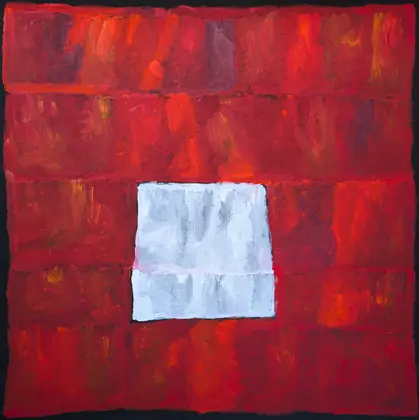
Kudditji Kngwarreye
My Country, 2013
synthetic polymer paint on linen
280 x 200 cm
$16,000
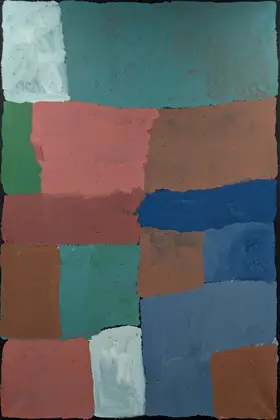
Kudditji Kngwarreye
My Country, 2007
synthetic polymer paint on linen
120 x 180 cm
$9,400
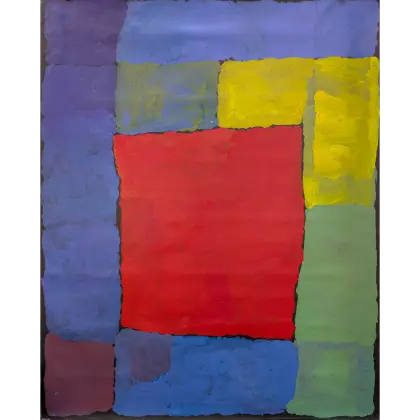
Kudditji Kngwarreye
My Country, 2012
synthetic polymer paint on canvas
129 x 150 cm
$7,000
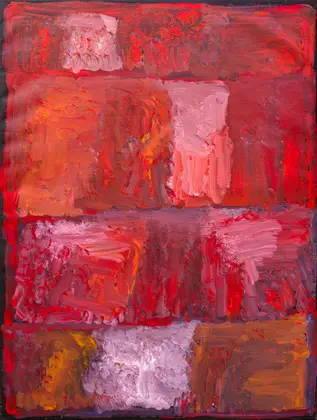
Kudditji Kngwarreye
My Country, 2009
synthetic polymer paint on linen
120 x 90 cm
$6,000
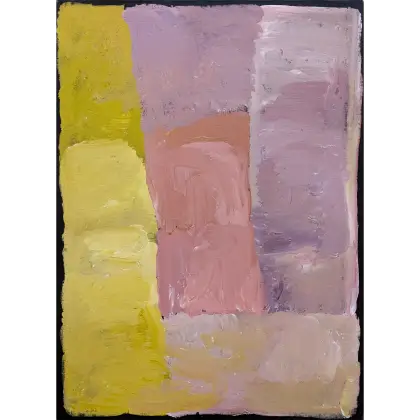
Kudditji Kngwarreye
My Country, 2012
synthetic polymer paint on Belgian linen
92 x 121 cm
$4,500
Rank #60Cumulative AAMI 4.91
Annual AAMI rating by year — hover or tap a bar for the exact figure.
How the AAMI rating is calculated
The AAMI (Aboriginal Art Market Index) measures an artist’s auction performance each year. Each annual rating combines the value of works sold (total sales and clearance rate), the number of works offered, and the average price achieved — with adjustments that temper thin trading years and a rising annual price threshold, so results stay comparable over time. The yearly ratings are added together into an artist’s Cumulative AAMI score, which determines their rank in the index.