Stockroom184 of 616
 Click to enlarge
George (Hairbrush) Tjungurrayi
b. c.1943
- Region
- Western Desert
- Community
- Kintore (Walungurru)
- Language group
- Pintupi
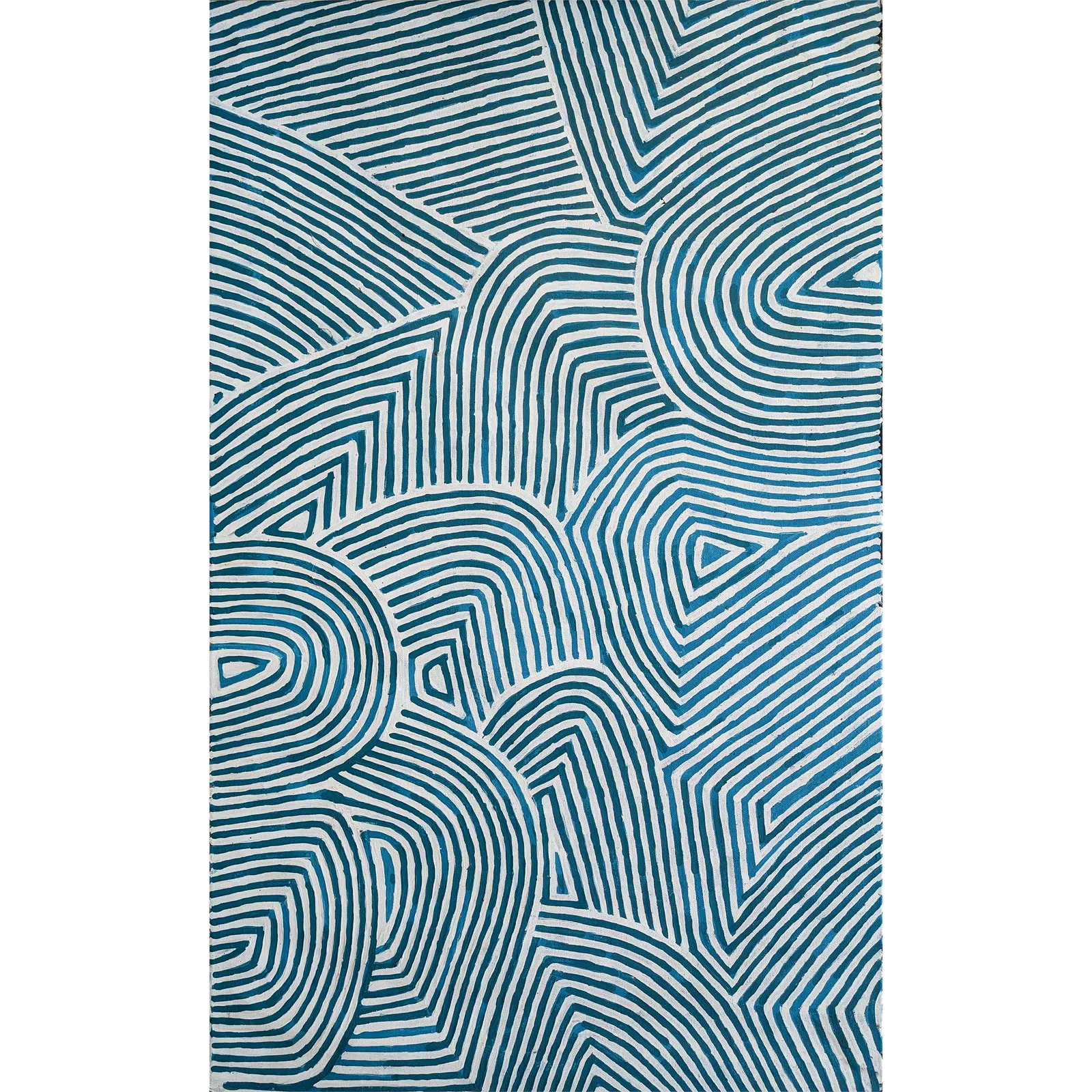
Tingari, 2005
synthetic polymer paint on Belgian linen
150 x 90 cm
$4,750
Secure payment via Stripe. Prices in AUD.
- Provenance
- Ngintaka Arts, Alice Springs, NT, Cat No. GT276 Private Collection NT Cooee Aboriginal Art Gallery, NSW
- Artwork story
- Born near the claypan and soakwater site of Wala Wala in the far reaches of the Western Desert, George Tjungurrayi's initial contact with the outside world occurred as a seventeen-year-old boy. He left the Gibson Desert on foot in the company of three other Pintupi companions to walk the long road east until intercepted by a truck just south of Mount Doreen. Soon after walking in to Papunya in 1962, he became a guide for Jeremy Long’s welfare patrol into Pintupi country later that year. He finally settled in West Camp, Papunya, where he began painting around 1976 after encouragement from Nosepeg Tjupurrula. Over the following decade George worked intermittently at Yayayi and Mount Liebig, and also Walungurru. His works, created during the 1970’s and throughout the 1980’s, were characterized by the ubiquitous dotted grids of lines and circles common to works by Yala Yala Gibbs, Anatjari Tjamptjinpa and others who played a formative influence in Pintupi Tingari imagery. While painting at Papunya and its outstations in the late 1970's, George worked in close proximity to these and other ‘established’ artists. It was not until well in to the mid 1980’s that he expanded his palette beyond the autumnal tones created by the basic palette of red, yellow, black and white by mixing in a wider array of colours and experimenting stylistically. His preoccupation from the outset had been the ceremonial activities and men’s stories associated with the travels of the Tingari ancestors as they relate to his most significant sites including his birthplace Wala Wala, and the region surrounding Kiwirrkura, Lake Mackay, Kulkuta, Karku, Ngaluwinyamana, and Kilpinya to the north-west of Kintore.