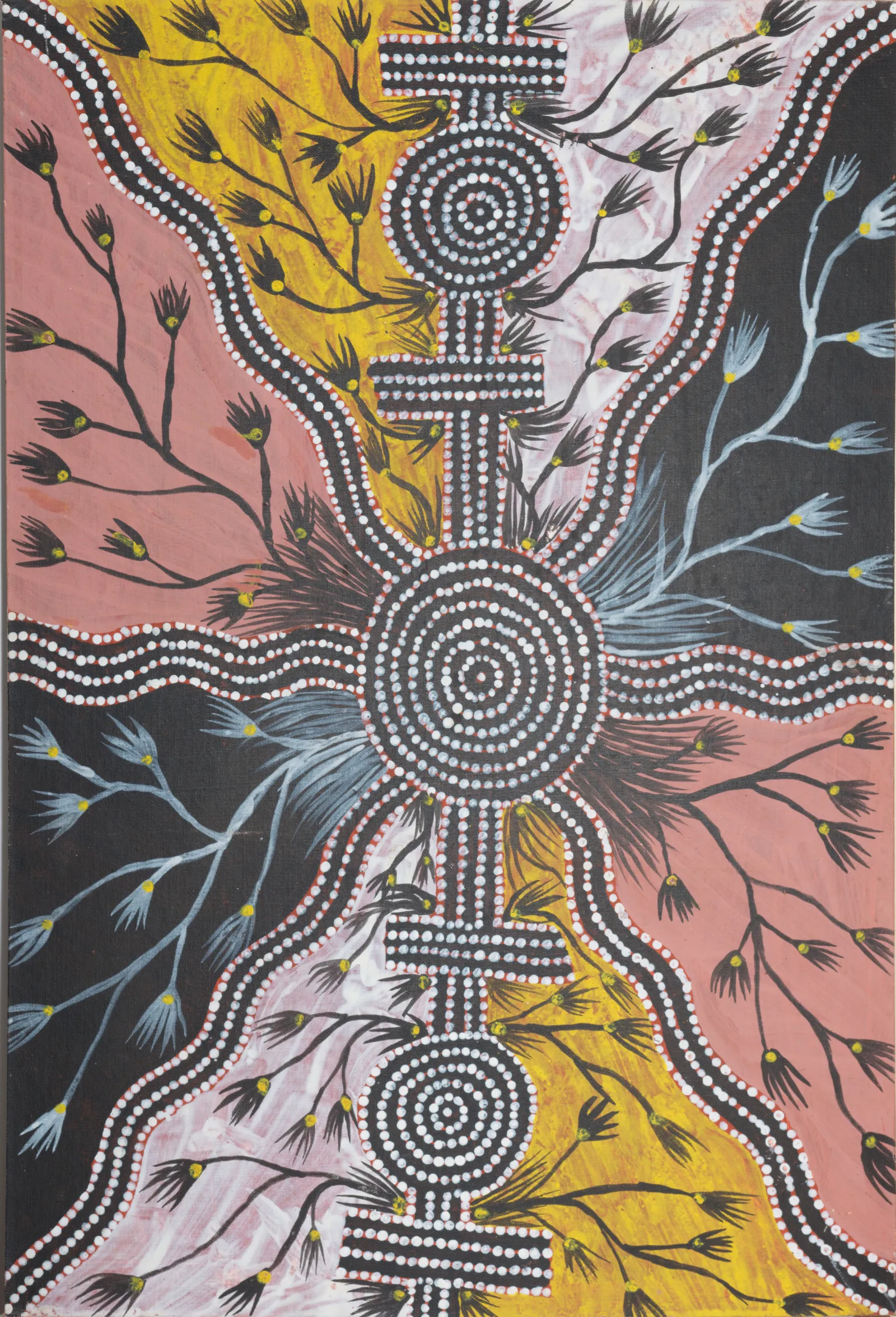
 Click to enlarge
c.1926 – 1989
- Region
- Western Desert
- Community
- Papunya
- Language group
- Anmatyerr (Anmatyerre); Arrernte (Aranda)
Walpunkurra, c.1979
synthetic polymer paint on canvas
51 x 76 cm
Sold
- Provenance
- Artwork story documented by Richard Glyn Kimber, Alice Springs NT Private Collection NSW * Richard "Dick" Glyn Kimber AM was an Australian historian and author who acted as the art coordinator for Papunya Tula Artists from 1976-78.
- Artwork story
- This painting depicts the activities of the Walpunkurra, two black tree goanna ancestors who lived in the vicinity of Mikantji, a soakage site approximately 300 kilometres north-west of Alice Springs during the Dreaming. During the distant past, a huge and violent storm passed through Mikantji from Kalipyinypa to the west. The storm ravaged the country as it passed. The floodwaters pushing debris before them while lightning struck and destroyed many of the trees in the area. However, as the stormwaters soaked into the soil, the country was rejuvinated and many new plants pushed to the surface. Kuputa, small green edible caterpillars also proliferated. The two Goanna Ancestors 'Walpunkurra' (who share both animal and human characteristics) collected many Kaputa from the area and cooked them in the ashes of a fire at Mikantji. The fire used by the Walpunkurra is symbolised by the sets of concentric circles. The actual geographic site envisaged is a short distance from the principal soakage site usually associated with the storm dreaming at Mikantji. The parallel bars symbolise the body paint on the contemporary ceremonial performers of the associated corroborree which is celebrated as part of the post initiatory instruction of young men in tribal law. The paths of the Walpunkurra around Mikantji are symbolised by a literal depiction of a goanna's track, including the mark left by the animal's dragging tail. The black dots symbolize the country under the heavy black rainclouds associated with the storm, while the white, red and yellow dots evoke the country in the subsequent sunshine.