 Click to enlarge
b. 1983
- Region
- Tiwi Islands
- Community
- Wurrumiyanga (Nguiu)
- Language group
- Tiwi
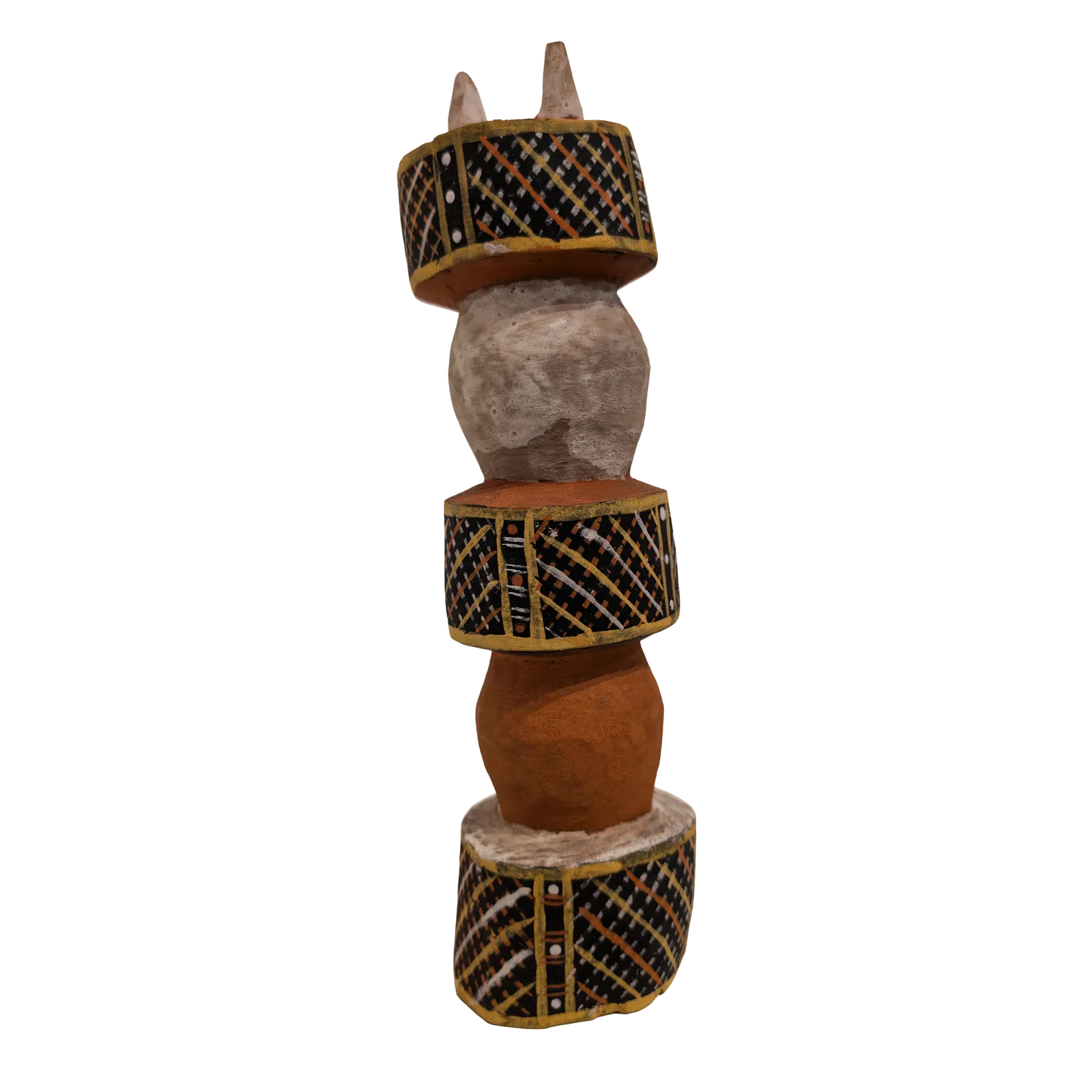
Tutini
natural earth pigments on carved wood
30 x 7.5 cm
Sold
- Provenance
- Ngaruwanajirri, Bathurst Island, NT
- Artwork story
- Romeo Ullungura's artwork takes roots in the funademtal Tiwi Creation Story. In the Tiwi version of creation, Bima, the wife of Purukapali, makes love to her brother in law while her son Jinani, left lying under a tree in the sun, dies of exposure. Purukapali becomes enraged and after his wife is transformed into a night curlew he begins an elaborate mourning ceremony for his son. This was the first Pukumani (mortuary) ceremony, and tells how death first came to the Tiwi Islands. The Pukumani ceremony is the culmination of ritual mourning for a deceased person. Several months after the burial, family commission in-laws of the deceased to carve and decorate elaborate tutini. These are then placed at the gravesite during a showy performance of song and dance, and tunga (bark bags) are placed upside down on top of the poles to signify the end of life. These sculpturally beautiful ‘artworks’ are left to the elements, returning to the bush from which they are made. Traditionally Tiwi use bloodwood for tutini, but cured ironwood is the preferred timber for commercial carvings thanks to its durability. Current practice of carving pukumani poles is an expression of the artist’s cultural heritage through contemporary art. They are created as an artistic form of expression to be viewed and appreciated by a broader public with the intention to maintain and share Tiwi cultural knowledge. Tutini carved with a pronged or forked apex represents the fight between Purukuparli and his brother Taparra the moon man. Diamond and curved shapes are a female embodiment, but each pole represents all and everything that is Tiwi culture.