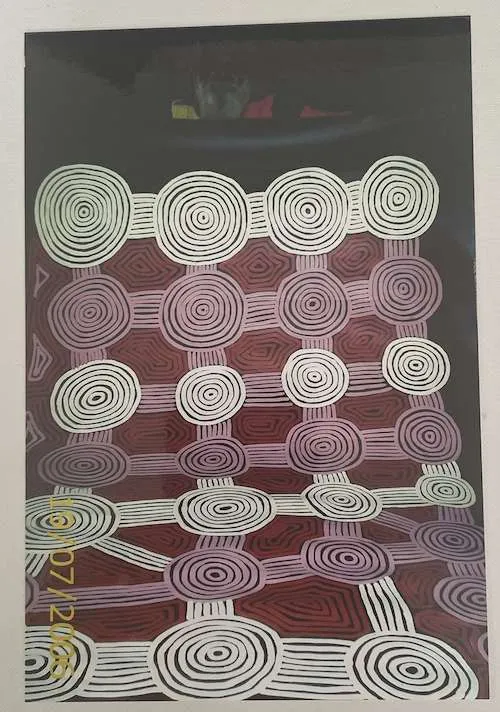
 Click to enlarge
c.1943 – 2023
- Region
- Western Desert
- Community
- Kintore (Walungurru)
- Language group
- Pintupi
Tingari, 2006
synthetic polymer paint on Belgian linen
180 x 125 cm
Enquire for price
- Provenance
- Grasstree Gallery, Albany, WA, Cat No. RT063GTG Accompanied by a certificate of authenticity from Grasstree Gallery and 6 photographs of the artist painting the artwork.
- Artwork story
- Ronnie Tjampitjinpa walked with his family out of the West Australian desert and settled into life in the tumultuous and crowded settlement of Papunya at 13 years of age. He was in his late 20s at the dawn of the Desert painting movement in the community. His tribal initiation into ceremonial knowledge, along with his familiarity with country and sacred sites, stood him in good stead when, as one of the youngest painters in Papunya, he was tutored by Old Mick Tjakamarra. As senior custodian of the Honey Ant Dreaming, Tjakamarra had played an instrumental role in initiating the Papunya art movement. Ronnie's works first appeared in Papunya Tula exhibitions during the 1970s, and later in commercial art galleries in Sydney and Melbourne throughout the 1980s, when he won the Alice Springs Art Prize. His work was subsequently included in a number of major survey exhibitions in Australia and overseas, including a solo retrospective in 2015 at the Art Gallery of NSW. The Tingari song and dance cycles are the most secret and sacred of the deeply religious rituals of the Western Desert Tribes of Central Australia. The songs associated with them consist of hundreds of stanzas, telling of the travels and adventures of the Tingari, their creation of sacred sites and fertility rites, the significance of body designs, and decorations made of woven human hair.