Stockroom189 of 616
 Click to enlarge
- Region
- Arnhem Land
- Community
- Milingimbi
- Language group
- Yolŋu (Yolngu) – Ḏäṯiwuy (Datiwuy) clan
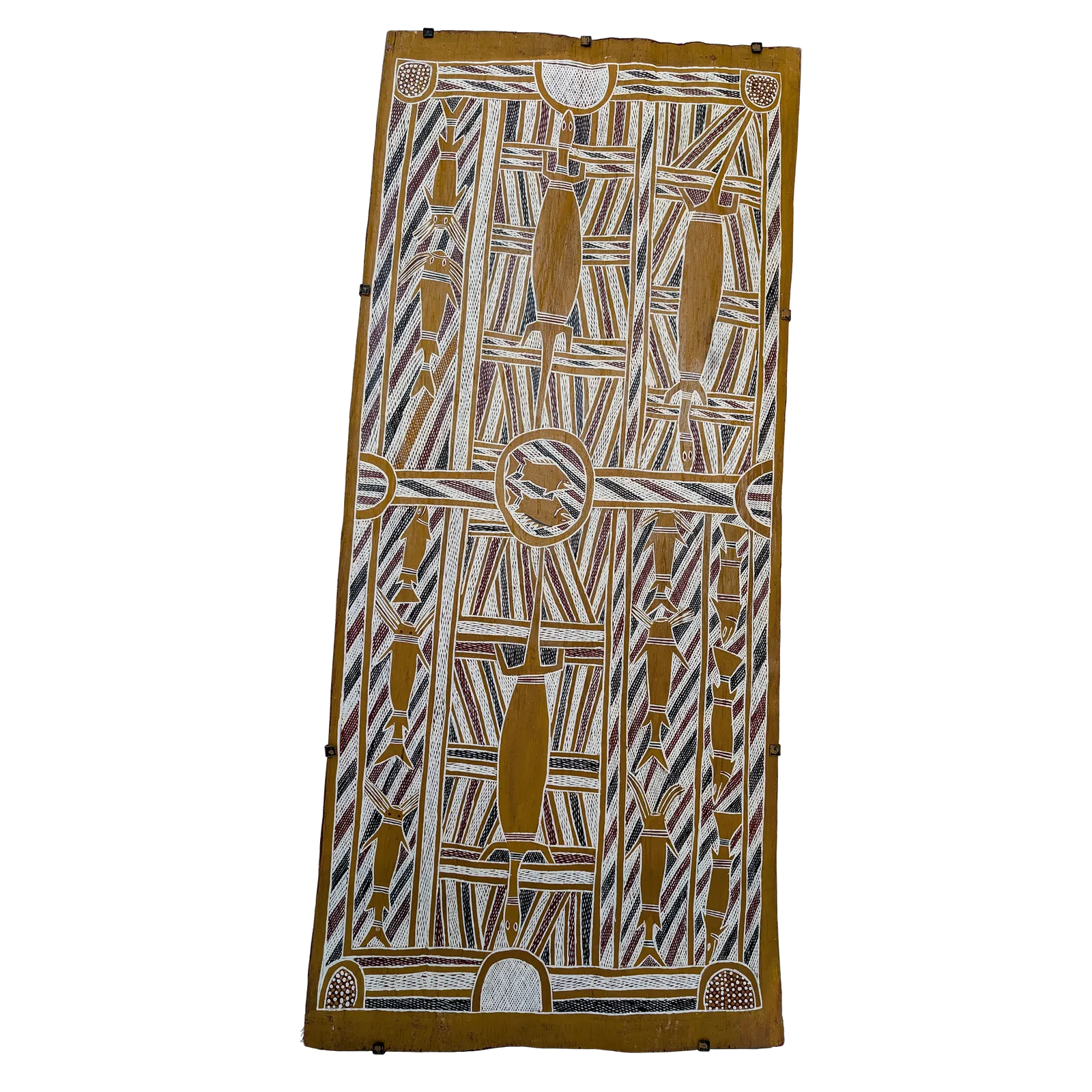
Fish, Catfish and Goanna, c.1990
natural earth pigments on bark
123 x 52 cm
$4,500
Secure payment via Stripe. Prices in AUD.
- Provenance
- Elcho Island Arts, Galiwin'ku, NT Private Collection Cooee Aboriginal Art Gallery, NSW
- Artwork story
- The name of the country is Barnbarrdji which is close to Rorrawuy on the eastern side of Arnhem Bay. This work depicts the Djanda (goanna), a totem animal of dhuwa moiety clans including the Datiwuy clan. There are two djanda in this painting however they represent a singular djanda as it goes in and comes out of Gapu Milminydjarrk (sacred waterholes). Manydjarri explains that the djanda is walking into the Milminydjarrk and then coming out and going to his hole or burrow in the earth. Traditionally, and still today, this design is painted onto the chest of young boys going into Dhapi (coming of age) ceremony. It can also be painted onto bodies during the Ngarra (cleansing) or Bapuru (funeral) ceremonies. Wilson explains that during Bapuru in the old time the design was painted on the body of the dead person today the design is painted on the body as well as on the coffin. This rarrk is called Nganak. It is only used to signify the tracks of goanna going in and out of the Milminydjarrk and is always limited to a palette of yellow, red and white. The roundel at the centre of the work represents Gawl (fish trap) placed by the Djankawu and blocking a creek at the site. Inside the trap are ‘Gapila’. The fish on the outside of the work are Rarrtjuk (barramundi) and Lirrmunga (Dhuwa catfish). Story direct from the artist, Milingimbi, 2017. Cooee Gallery tracked down the artist and provenance of this work with the help of Milingimbi and Buku Larrnggay Arts Centres.