Stockroom505 of 616
 Click to enlarge
c.1925–1935 – 2022
- Region
- Arnhem Land
- Community
- Ramingining
- Language group
- Yolŋu (Yolngu) – Liyagalawumirr
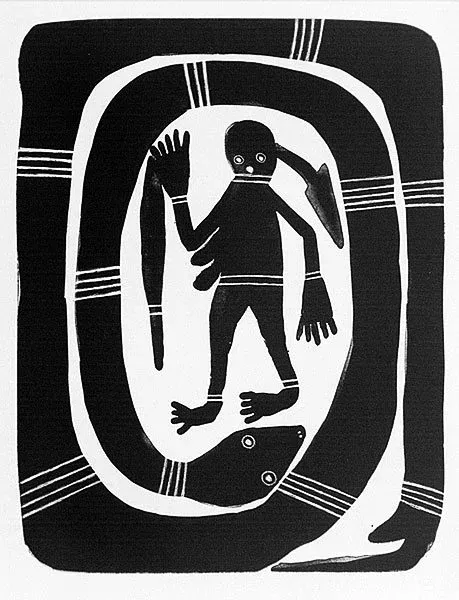
Wagilag Sisters, 1992
lithograph on paper
$500
Secure payment via Stripe. Prices in AUD.
- Edition
- 1 of 30
- Printer
- Theo Tremblay
- Studio
- Studio One, Canberra, ACT
- Image size
- 33 x 25 cm
- Artwork story
- The Wagilag Story A major creation story of the Yolngu people is that of the Wagilag Sisters which is associated with the landward freshwater side of the country. This story is the basis of the major religious movement in central Arnhem land. The Wagilag story concerns two sisters who have incestuous relationships with their clansmen. The older sister has a boy as a result, and the younger one falls pregnant. They leave their country and travel towards the sea, naming (and creating) animals, plants and country they encounter on their journey. The younger sister gives birth to a boy just before they reach the waterhole of Mirrarrmina where they make camp. They are unaware that, Mirrarrmina is the sacred home of Yurlunggur (also known as Wititj), the giant python. The older sister enters the waterhole, an act which angers Yurlunggur who emerges from the bottom of the waterhole, sucks in water and spits it out into the sky to form the rain clouds of the first monsoon season. The sisters sing and dance in an effort to stop the rain. Yurlunggur rises erect in the sky and suddenly descends on the women, swallowing them, their children and all their belongings. As Yurlunggur raises himself into the sky again, floodwaters cover the earth. Yurlunggur discusses his exploits with the other ancestral pythons and is made to realise that the sisters belong to the same Dhuwa moiety as himself and are therefore prohibited food. Yurlunggur becomes ill and crashes to the ground leaving the impression of his body in the earth. he vomits the women and the children and a strong wind blows, whereupon the floodwaters recede. Then the swallowing and vomiting is repeated but this time Yurlunggur regurgitates the women only. They can be seen today as two large boulders at Mirrarrmina. Back in their own country the Wagilag men see the commotion in the distance, follow the sisters, make camp and sleep at Mirrarrmina. In their sleep the two Wagilag Sisters come to the men and teach them the songs and dances they had performed to stop the rain. The women instruct the men to return home and perform these in ceremony forever more to ensure the continuation of the cycles of nature. Text by Djon Mundine Windows on the Dreaming Ellsyd Press Canberra/Sydney 1989.