Catalogues159 of 257
 Click to enlarge
Sale 3 · Lot 11
James Iyuna
1959 – 2016
- Region
- Arnhem Land
- Community
- Mumeka
- Language group
- Kuninjku (Eastern Kunwinjku)
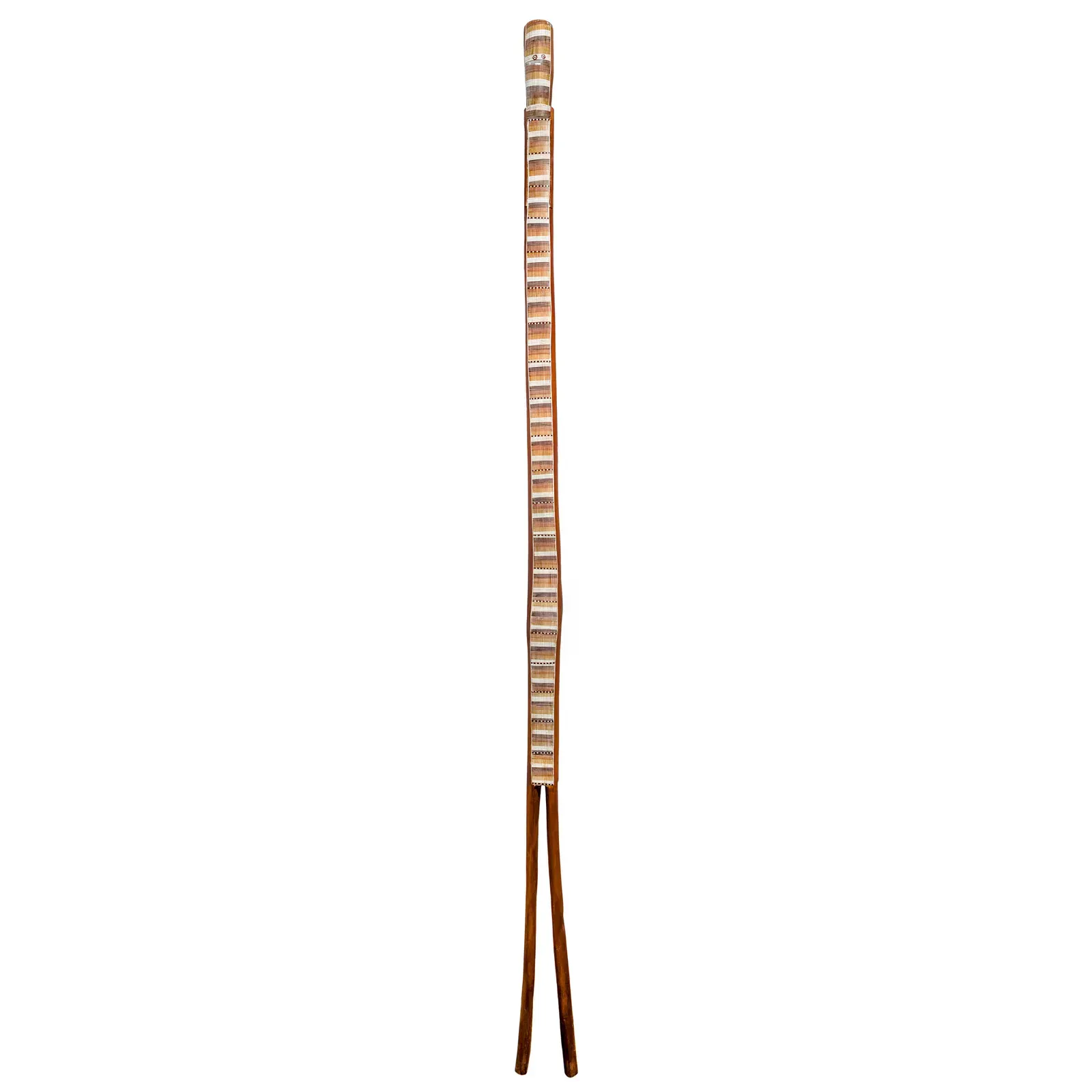
Mimih Spirit, 2003
peanut tree (sterculia quadrifica) with ochre pigment and PVC fixative
305 cm (length)
Est. $1,500 – $2,500
Hammer $1,500
- Provenance
- Maningrida Arts & Culture, Maningrida, NT, Cat No. 4041-03 Private Collection, NSW, acquired from the above Accompanied by original tag and a certificate of authenticity from Maningrida Arts & Culture
- Artwork story
- Before humans knew how to hunt, butcher game, dance, sing, or paint, the Mimih knew. According to Maningrida Arts & Culture, it was these tall slender spirits of the Arnhem Land plateau who passed that knowledge to the first people, and the song and dance style of Western Arnhem Land is still known today as Mimih style, a living acknowledgement of a debt that reaches back before human memory. James Iyuna's figure, carved from the naturally slender trunk of the peanut tree (sterculia quadrifica) and decorated with ochre pigment, achieves in its very material a formal echo of its subject. At 305 centimetres it stands at the extreme of what the tree's form allows, its verticality and thinness giving it a presence entirely consistent with a being whose body is so fragile it retreats into rock crevices when the wind rises, lest it shatter. Registers of banded geometric patterning in ochre animate the carved surface from base to crown, rooting the figure firmly within the visual traditions of West Central Arnhem Land. Apolline Kohen, then Cultural Research Officer at Maningrida Arts & Culture, notes that despite their role as teachers, the Mimih carry an edge of danger: capable of mischief and harm, and certain men of exceptional spiritual power have spent time living in their camps, learning their songs and dances and being shown their secret places. Iyuna's figure holds both registers at once: the grace of the ancestral teacher and the unease of an encounter that cannot be fully controlled.