On loan from the collection of the National Gallery of Australia
ARTWORK STORY
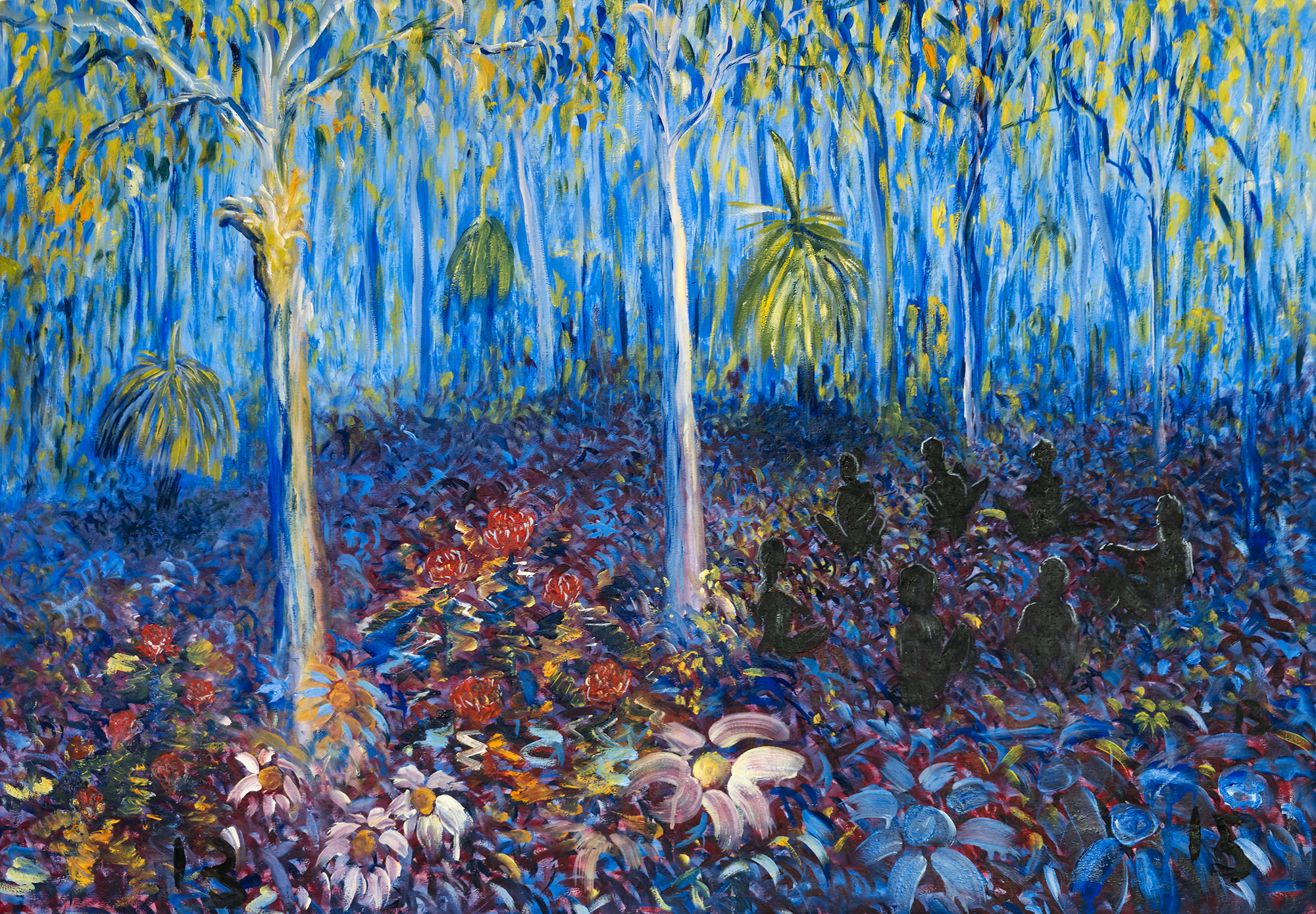
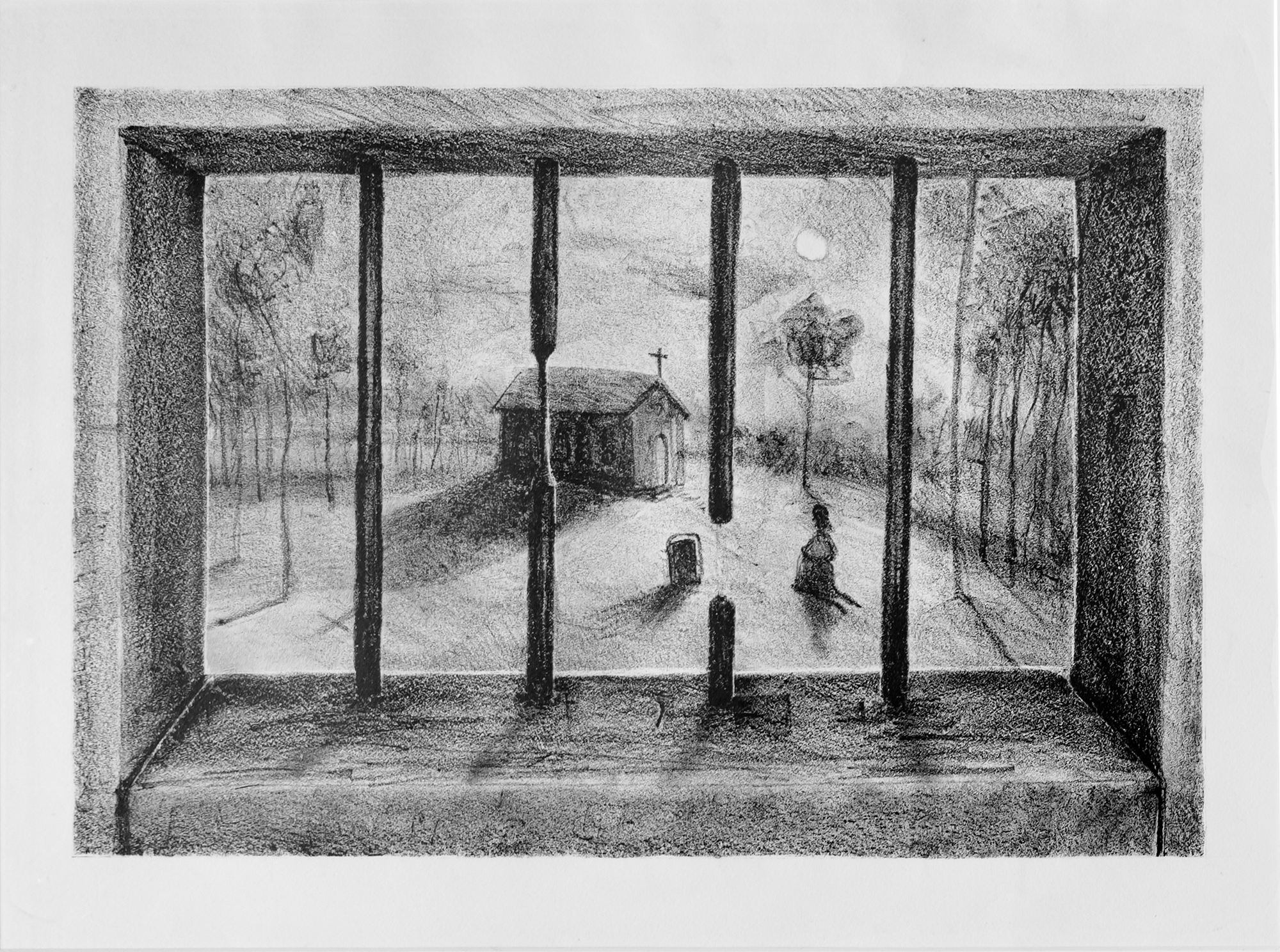
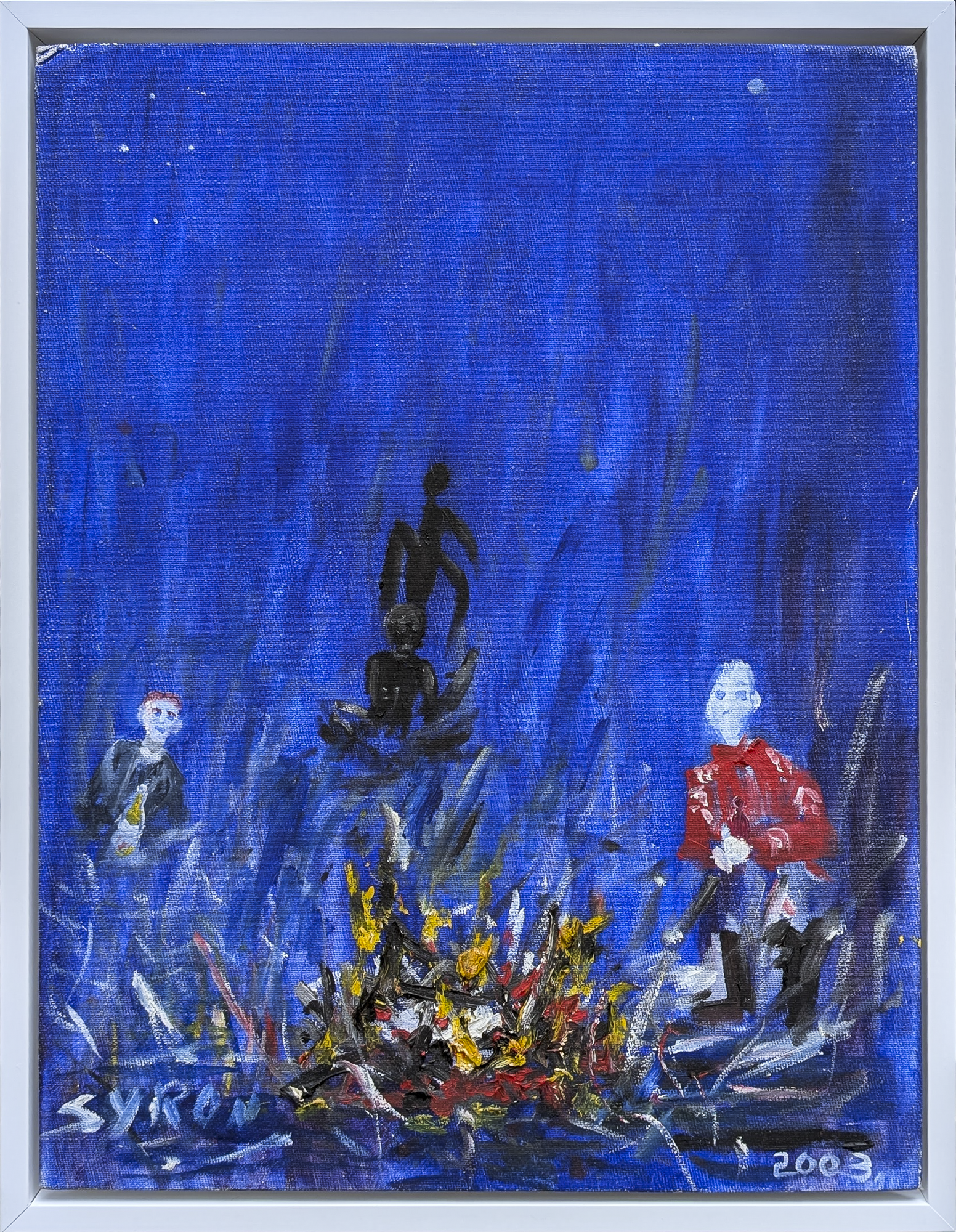
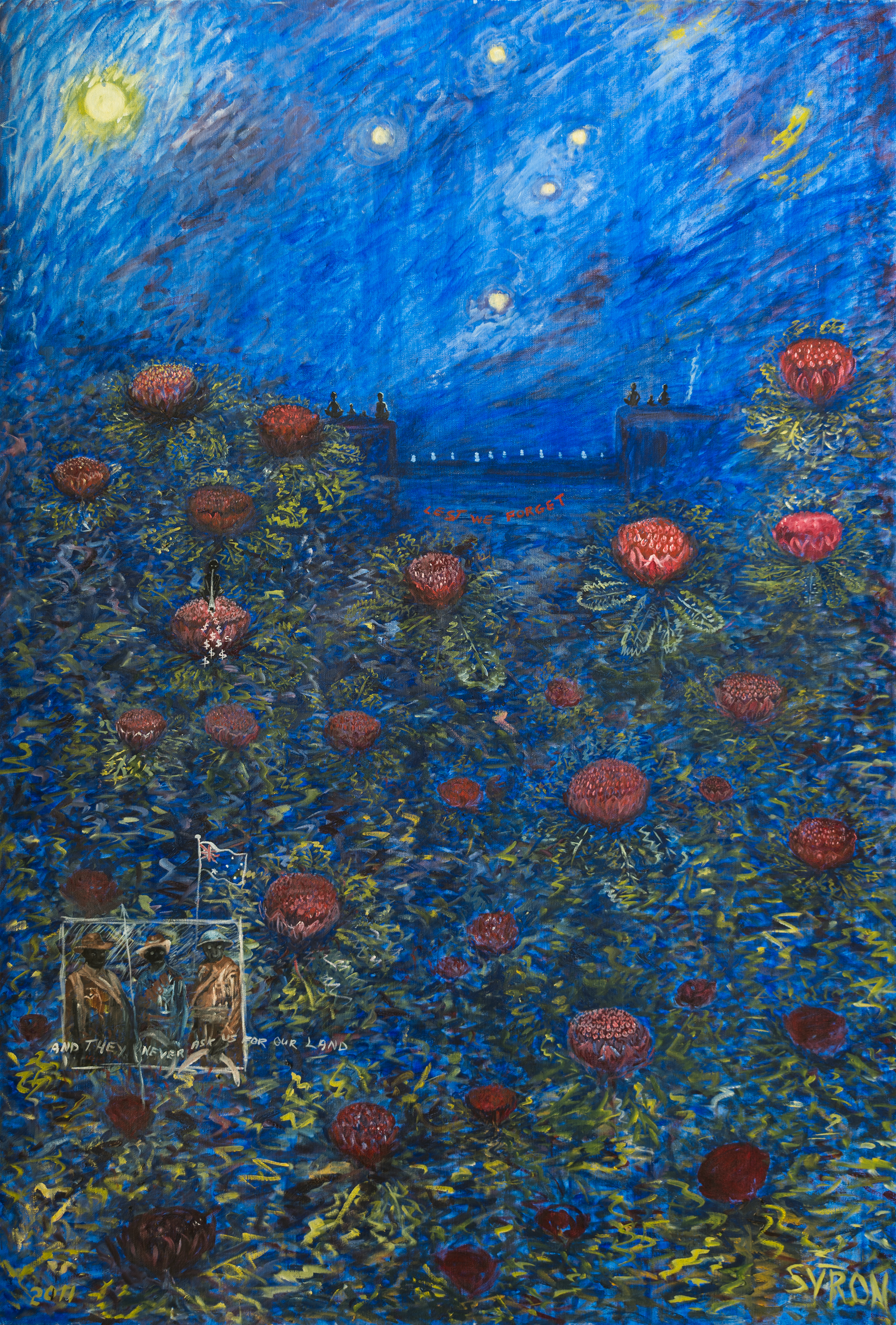
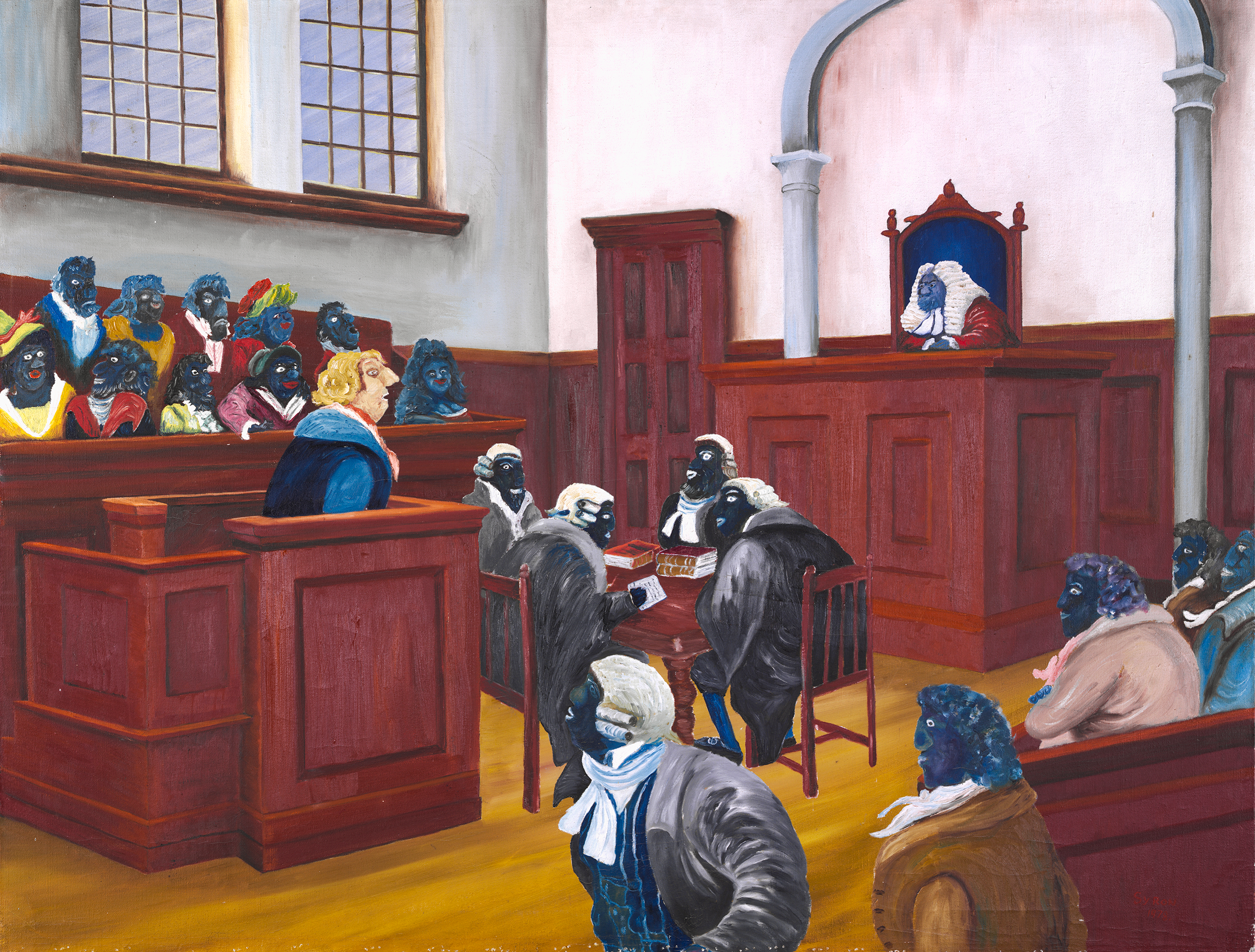
This painting was created in Long Bay Gaol and first hung in the artist’s prison cell while he was serving a life sentence for a death that resulted from tribal retribution.
It was first shown publicly at Murawina (meaning ‘Black Woman’) — a childcare centre on Eveleigh Street, Redfern — in 1978–79. The exhibition was organised by three of the seminal women working with children on ‘the Block’: Mrs Bostock, Mrs Merritt and Mrs Ingram. The Block was a hotbed of political tension at this time, yet according to the artist:
‘Not one car was touched. All who came were safe. Many law people attended. I came out of prison for the evening to attend my own art exhibition and a prison officer accompanied me. He said, “Just call me Jack for the evening instead of Sir!”’
The painting was initially exhibited under the title The Real Australian Story. Reflecting on its subject, the artist later stated:
‘I believe I would not have been sentenced at all, had I been judged by an Aboriginal jury. In British law a man is judged by his peers.’
In explaining the background to this work, Syron said:
‘This painting is my most meaningful work. It is the story of my life. This trial happened to me. I challenged the jury system of Australia. I asked that I be judged by my peers, and your peers are your equals. I asked to have some Aboriginal people on my jury. One lawyer said that I wasn’t black enough to be black and the other lawyer said that I wasn’t white enough to be white. They then argued this point in front of me for some time. Both my parents were Aboriginal. It was such an insult to me and my family. I was judged by an all-white jury. (If you are a pink fella then according to British law and now Australian law you are entitled to have a pink person on the jury.) I served a life sentence.’
The painting instantly struck a chord with Aboriginal audiences given the high rates of incarceration at the time.
Today the disparity has grown even more stark: Aboriginal people make up roughly one-third of the prison population in New South Wales while representing just over 3% of the state’s population.
On loan from the collection of the National Gallery of Australia
ARTWORK STORY
This painting was created in Long Bay Gaol and first hung in the artist’s prison cell while he was serving a life sentence for a death that resulted from tribal retribution.
It was first shown publicly at Murawina (meaning ‘Black Woman’) — a childcare centre on Eveleigh Street, Redfern — in 1978–79. The exhibition was organised by three of the seminal women working with children on ‘the Block’: Mrs Bostock, Mrs Merritt and Mrs Ingram. The Block was a hotbed of political tension at this time, yet according to the artist:
‘Not one car was touched. All who came were safe. Many law people attended. I came out of prison for the evening to attend my own art exhibition and a prison officer accompanied me. He said, “Just call me Jack for the evening instead of Sir!”’
The painting was initially exhibited under the title The Real Australian Story. Reflecting on its subject, the artist later stated:
‘I believe I would not have been sentenced at all, had I been judged by an Aboriginal jury. In British law a man is judged by his peers.’
In explaining the background to this work, Syron said:
‘This painting is my most meaningful work. It is the story of my life. This trial happened to me. I challenged the jury system of Australia. I asked that I be judged by my peers, and your peers are your equals. I asked to have some Aboriginal people on my jury. One lawyer said that I wasn’t black enough to be black and the other lawyer said that I wasn’t white enough to be white. They then argued this point in front of me for some time. Both my parents were Aboriginal. It was such an insult to me and my family. I was judged by an all-white jury. (If you are a pink fella then according to British law and now Australian law you are entitled to have a pink person on the jury.) I served a life sentence.’
The painting instantly struck a chord with Aboriginal audiences given the high rates of incarceration at the time.
Today the disparity has grown even more stark: Aboriginal people make up roughly one-third of the prison population in New South Wales while representing just over 3% of the state’s population.