ARTWORK STORY
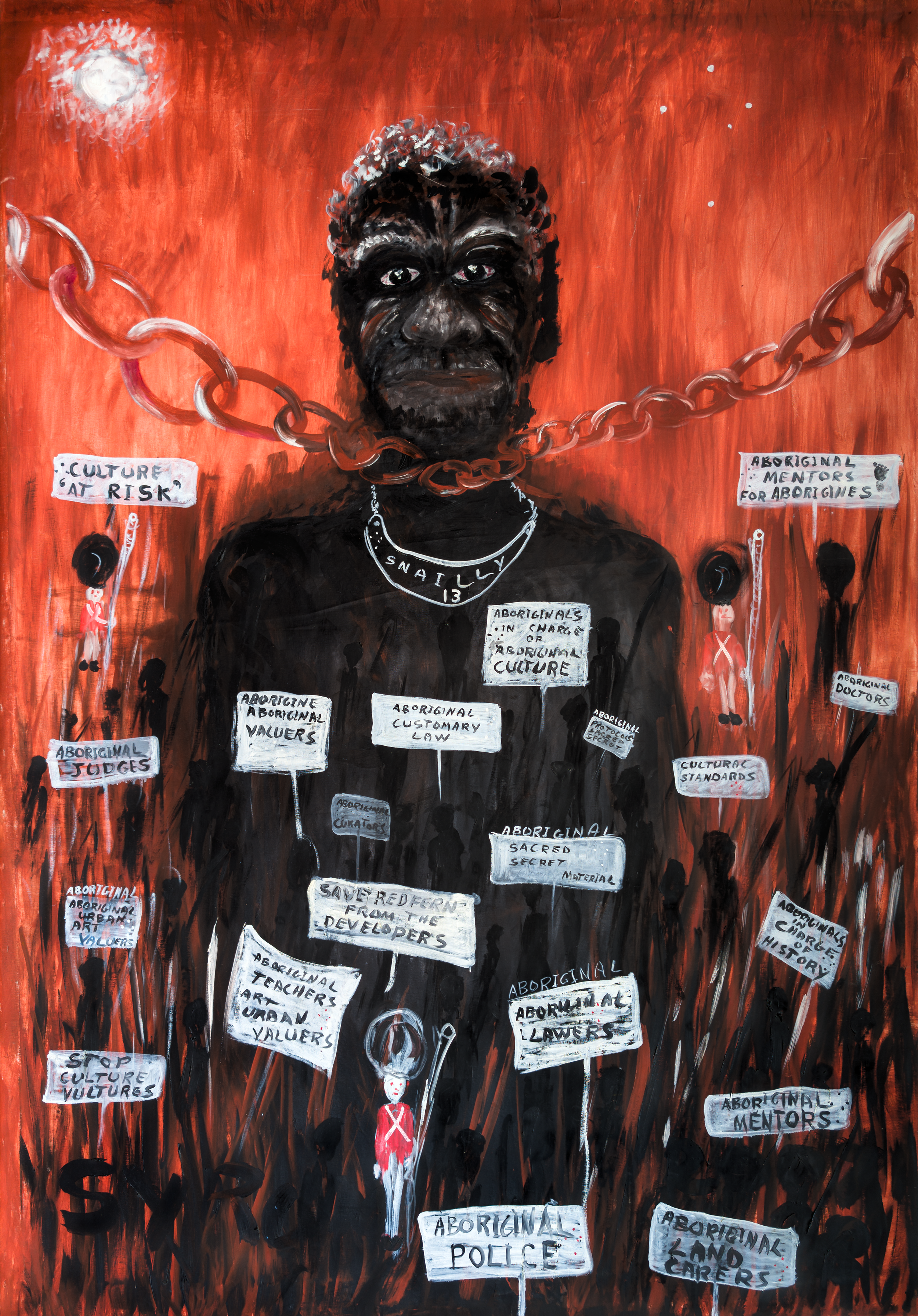
The title of this self-portrait, Snailly 13, references a brass breastplate held in The Keeping Place collection, engraved ‘Snailly, King of the River Paroo.’ The number 13 refers to the prison identification number by which Gordon Syron was known during his incarceration — a system that stripped inmates of their personal identity and further dehumanised them.
At the centre of the composition is the artist’s own naked, chained body. The inscriptions painted across the figure function as both personal testimony and political commentary. The word ‘culture’ appears repeatedly, alongside phrases such as ‘Culture Vultures’, referencing the colonial forces — often symbolised by the Redcoats — who first imposed physical chains on Aboriginal people and later more insidious mental and cultural restraints.
Painted messages across the body further articulate the artist’s vision for cultural self-determination. The phrase ‘Aborigines In Charge Of Aboriginal Culture’ calls attention to the many restrictions historically imposed on Aboriginal people—such as bans on speaking language, practising ceremony, or living according to traditional law. Through this declaration, Syron asserts the necessity for Aboriginal leadership in cultural, legal, and historical representation.
ARTWORK STORY
The title of this self-portrait, Snailly 13, references a brass breastplate held in The Keeping Place collection, engraved ‘Snailly, King of the River Paroo.’ The number 13 refers to the prison identification number by which Gordon Syron was known during his incarceration — a system that stripped inmates of their personal identity and further dehumanised them.
At the centre of the composition is the artist’s own naked, chained body. The inscriptions painted across the figure function as both personal testimony and political commentary. The word ‘culture’ appears repeatedly, alongside phrases such as ‘Culture Vultures’, referencing the colonial forces — often symbolised by the Redcoats — who first imposed physical chains on Aboriginal people and later more insidious mental and cultural restraints.
Painted messages across the body further articulate the artist’s vision for cultural self-determination. The phrase ‘Aborigines In Charge Of Aboriginal Culture’ calls attention to the many restrictions historically imposed on Aboriginal people—such as bans on speaking language, practising ceremony, or living according to traditional law. Through this declaration, Syron asserts the necessity for Aboriginal leadership in cultural, legal, and historical representation.