ARTWORK STORY
I live above my gallery in Redfern, only seven minutes by bus from the most beautiful harbour in the world. The year is 2003. Sydney — following the success of the 2000 Olympic Games — is a wonderful place to live.
The sunsets on the edge of Sydney Harbour are an artist’s dream. The orange and burnt yellow and the glowing ochres are imprinted on my mind forever. It is as if the clouds have opened and heaven has appeared
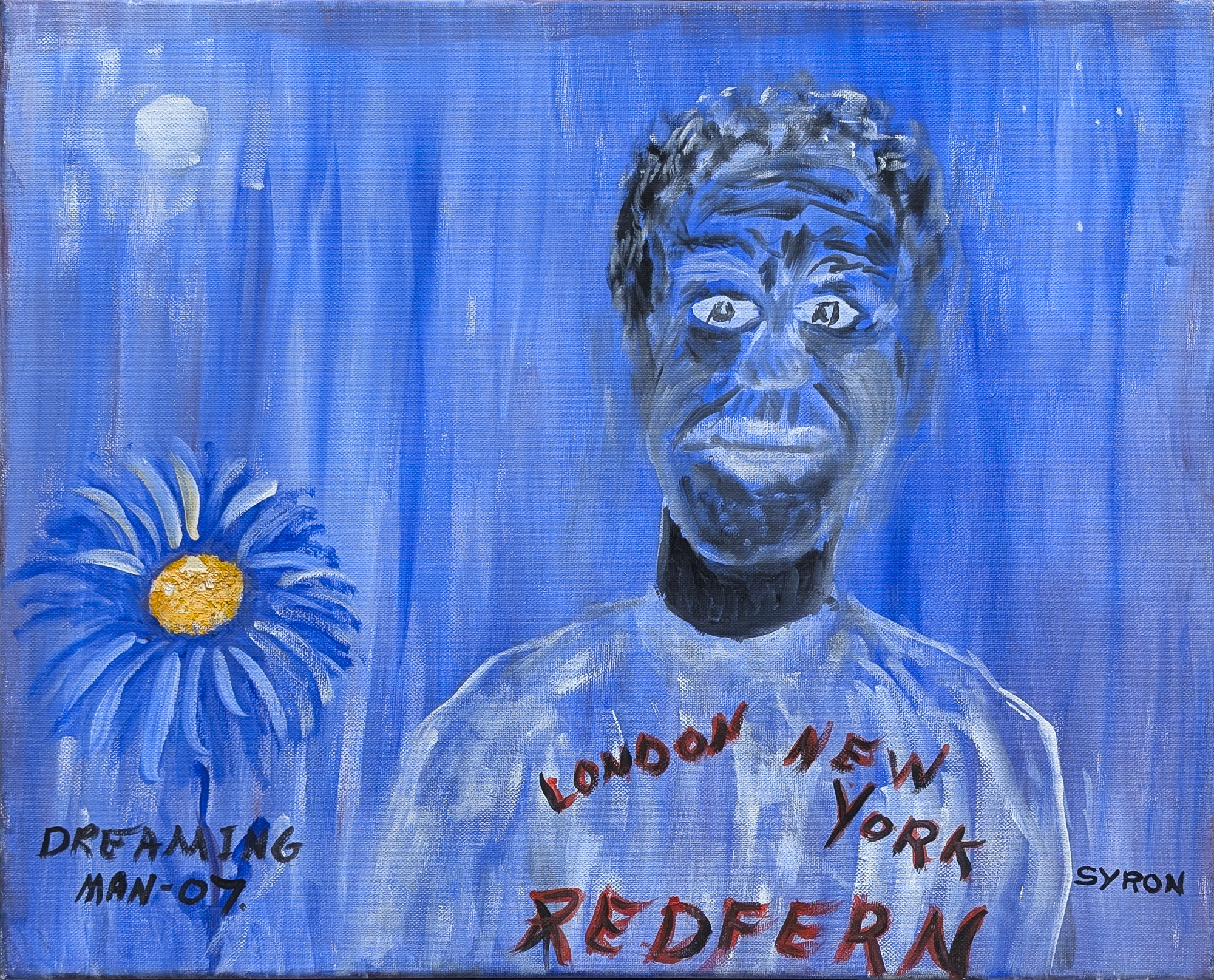
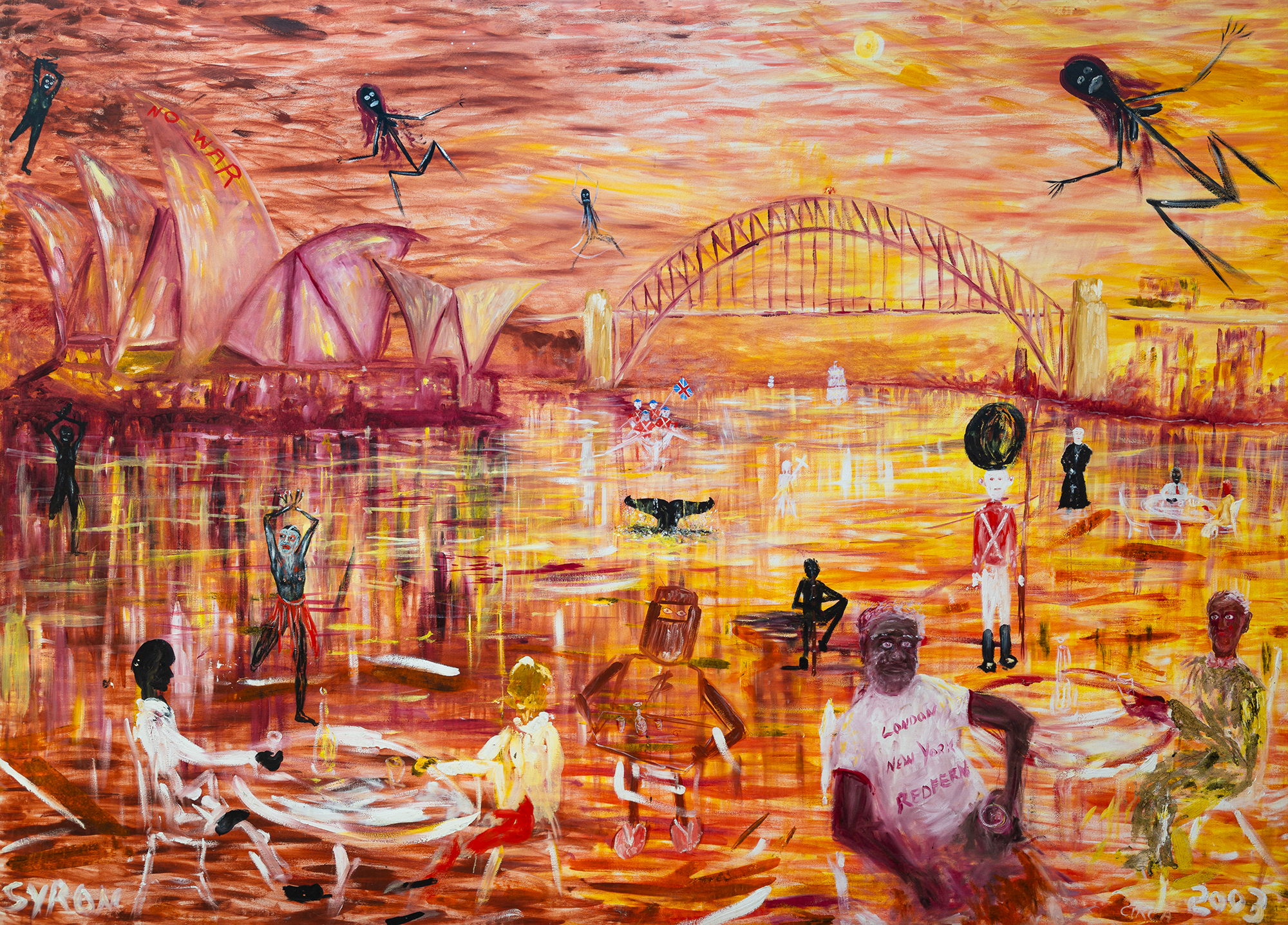
In the foreground of this painting is a self-portrait of myself and my wife-to-be the following year, Elaine. We are seated at a table with a cold drink in hand. Nearby are other tables served by Ned Kelly, one of our national icons. Aboriginal people dominate the scene. In the foreground is another table with Gary Foley sporting a shirt marked,
London
New York
Redfern
I use this theme in my series of paintings to give credit to Redfern as the cradle — or the bridge — between the traditional Aboriginal community and my heroes, who in the 1970s and 1980s, established the Aboriginal Legal Service, the Aboriginal Medical Service, Land Councils, Aboriginal Childrens’ Service, Black Theatre and Murawina (a child care centre run by three Aboriginal women, Mrs Bostock, Mrs Ingram and Mrs Merritt).
In 2003 Sydney Harbour was still clean following the enormous clean-up undertaken for the Olympic Games, and a whale even wandered into the warm waters and performed for journalists and tourists in front of the Sydney Opera House.
That same year a brave soul climbed onto the top sail of the Opera House and wrote “NO WAR”. I was impressed. It was a death-defying act of passion and conviction.
On March 19, the United States declared war on Iraq and Australia followed, sending troops as well.
The Sydney Harbour Bridge is an Australian icon in it’s own right. A strong and beautiful dancer represents NAISDA and Bangarra. Friendly female Mimi spirits dance in the sky and the children are safe tonight. A pale moon is rising. The Redcoat stands guard, ever present since colonisation. The preacher man and others hover nearby, and the Holy Cross hangs in the background, always present.
A year earlier, in 2002, Chika Dixon, a respected Elder and activist, officially opened my museum in Darlinghurst on Oxford Street. Four generations of Chika’s family — Rhonda, Nadeena and her children — danced and sang on the street and into the gallery. It had been thirty years since I received a life sentence in the Darlinghurst Court across the street, next door to Clover Moore’s office.
Oxford Street is the centre of Sydney’s nightlife and the restaurants are packed. Darlinghurst is not far from the harbour. I grew up on the Coolongolook River, so I love the water and I especially love the most beautiful harbour in the world: Sydney Harbour.
ARTWORK STORY
I live above my gallery in Redfern, only seven minutes by bus from the most beautiful harbour in the world. The year is 2003. Sydney — following the success of the 2000 Olympic Games — is a wonderful place to live.
The sunsets on the edge of Sydney Harbour are an artist’s dream. The orange and burnt yellow and the glowing ochres are imprinted on my mind forever. It is as if the clouds have opened and heaven has appeared
In the foreground of this painting is a self-portrait of myself and my wife-to-be the following year, Elaine. We are seated at a table with a cold drink in hand. Nearby are other tables served by Ned Kelly, one of our national icons. Aboriginal people dominate the scene. In the foreground is another table with Gary Foley sporting a shirt marked,
London
New York
Redfern
I use this theme in my series of paintings to give credit to Redfern as the cradle — or the bridge — between the traditional Aboriginal community and my heroes, who in the 1970s and 1980s, established the Aboriginal Legal Service, the Aboriginal Medical Service, Land Councils, Aboriginal Childrens’ Service, Black Theatre and Murawina (a child care centre run by three Aboriginal women, Mrs Bostock, Mrs Ingram and Mrs Merritt).
In 2003 Sydney Harbour was still clean following the enormous clean-up undertaken for the Olympic Games, and a whale even wandered into the warm waters and performed for journalists and tourists in front of the Sydney Opera House.
That same year a brave soul climbed onto the top sail of the Opera House and wrote “NO WAR”. I was impressed. It was a death-defying act of passion and conviction.
On March 19, the United States declared war on Iraq and Australia followed, sending troops as well.
The Sydney Harbour Bridge is an Australian icon in it’s own right. A strong and beautiful dancer represents NAISDA and Bangarra. Friendly female Mimi spirits dance in the sky and the children are safe tonight. A pale moon is rising. The Redcoat stands guard, ever present since colonisation. The preacher man and others hover nearby, and the Holy Cross hangs in the background, always present.
A year earlier, in 2002, Chika Dixon, a respected Elder and activist, officially opened my museum in Darlinghurst on Oxford Street. Four generations of Chika’s family — Rhonda, Nadeena and her children — danced and sang on the street and into the gallery. It had been thirty years since I received a life sentence in the Darlinghurst Court across the street, next door to Clover Moore’s office.
Oxford Street is the centre of Sydney’s nightlife and the restaurants are packed. Darlinghurst is not far from the harbour. I grew up on the Coolongolook River, so I love the water and I especially love the most beautiful harbour in the world: Sydney Harbour.