On loan from the National Museum of Australia
Not for sale
ARTWORK STORY
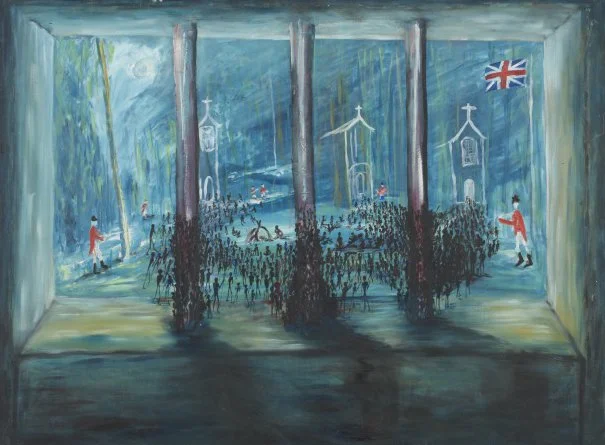
Gordon Syron Painted while in prison.“ This painting is unsigned because prison is such a lonely place. This painting is my prison window that I looked at for 10 years and I saw history through these bars that the redcoats brought to us; disease, rum, religion and death and destruction for my culture.
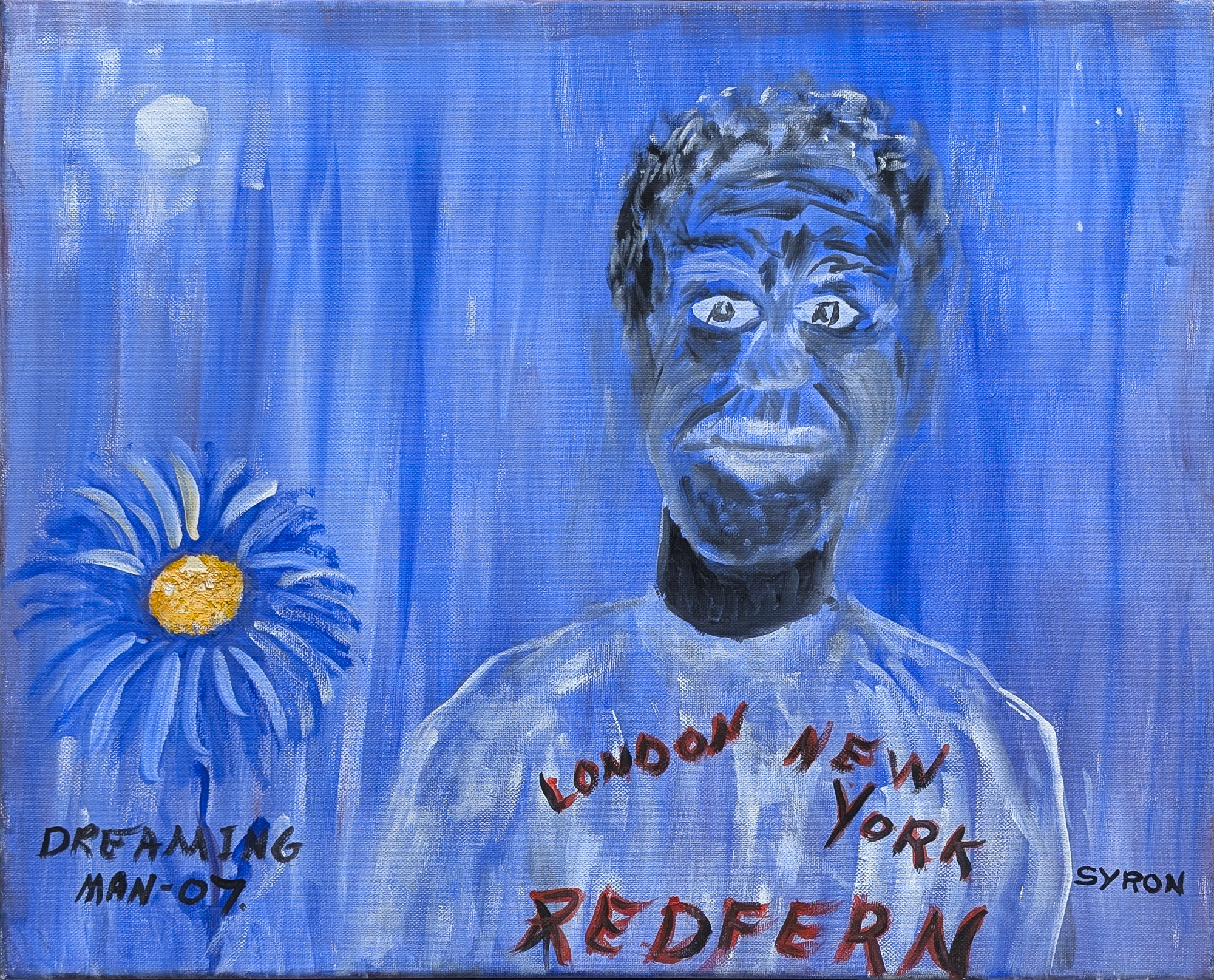
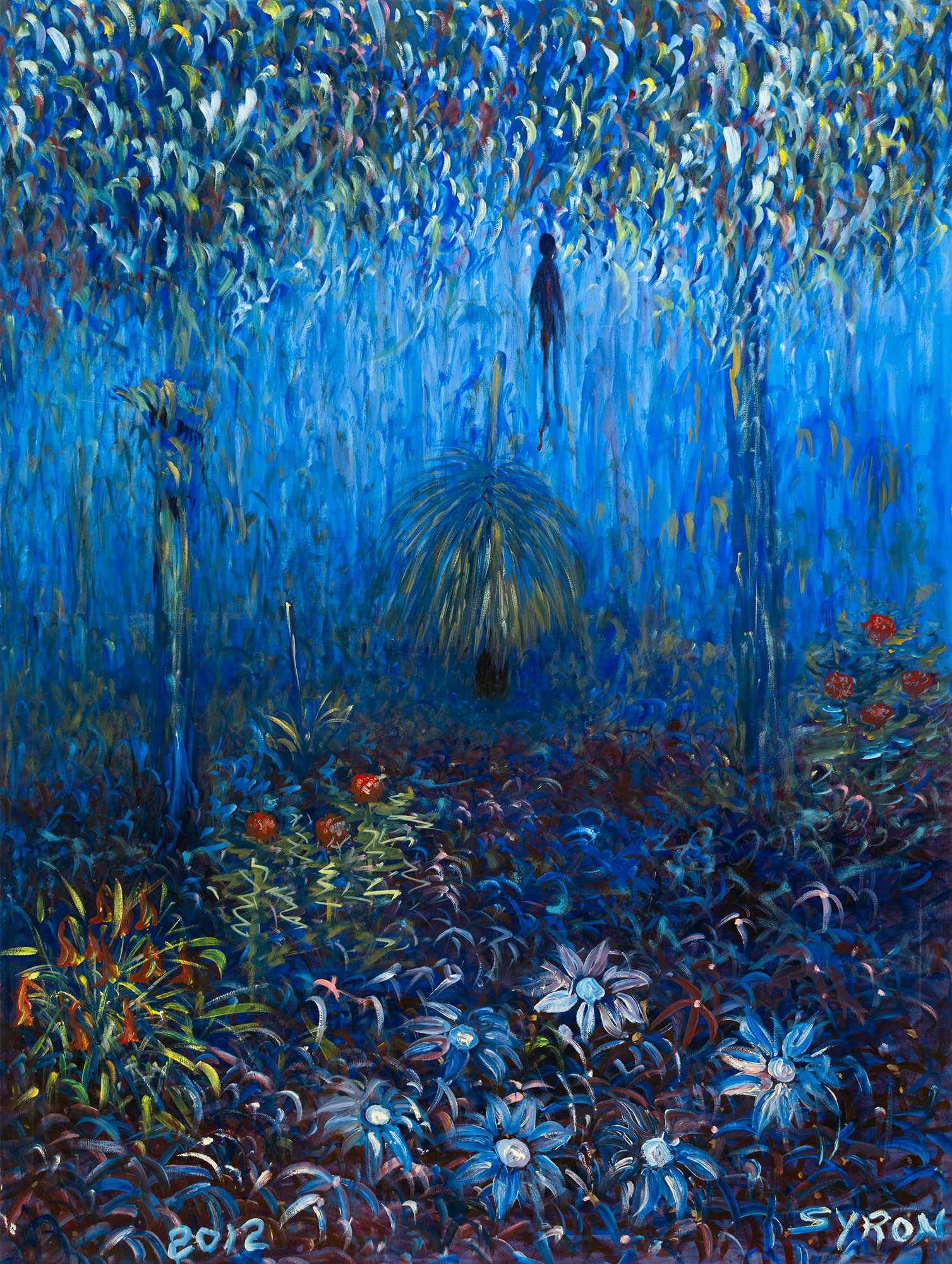
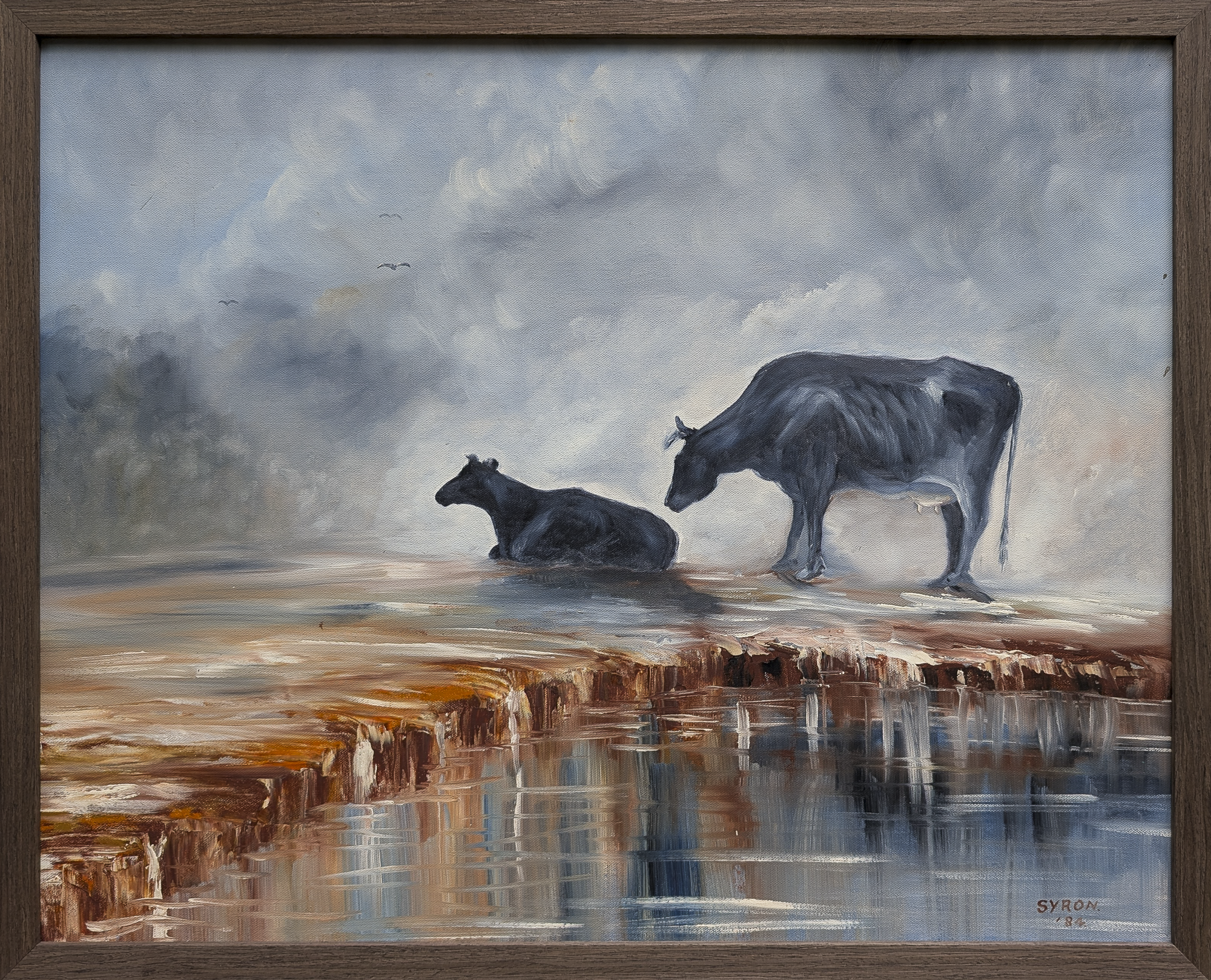
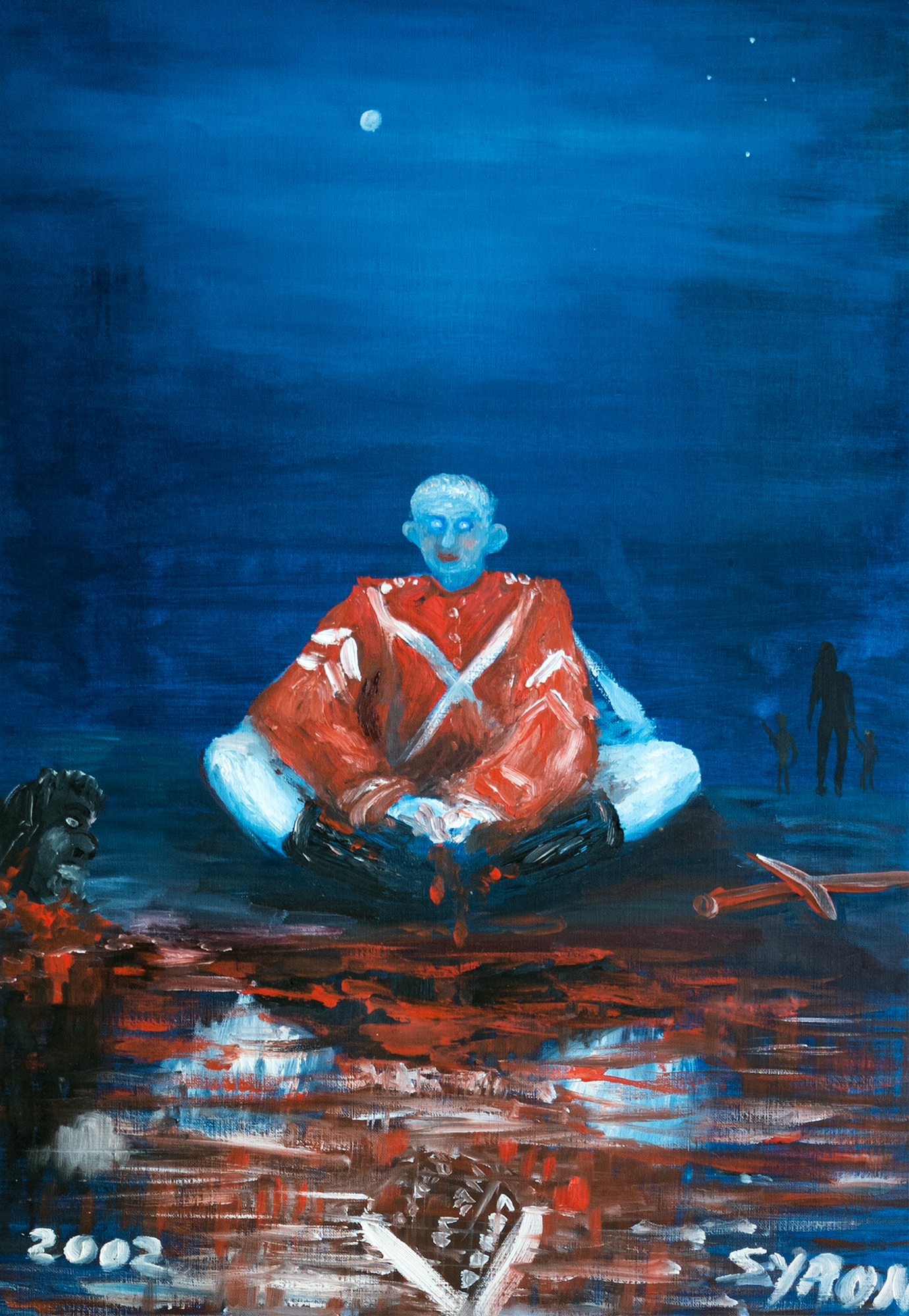
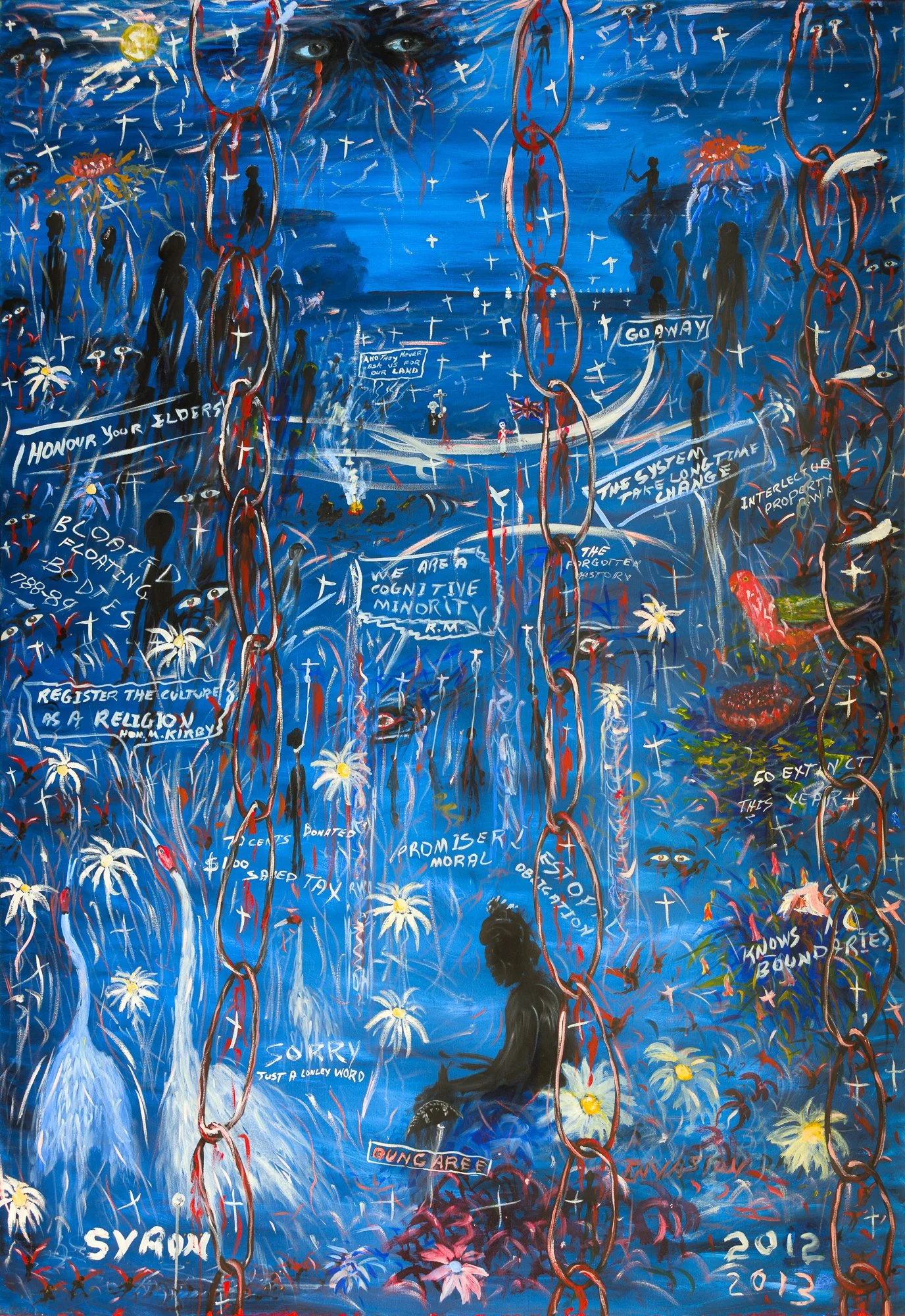
Gordon Syron is widely considered the father of the Urban Aboriginal art movement. He taught himself to paint during a decade serving time in gaol during the 1960s. This lithograph was his first experiment with printmaking.
Looking through the bars on the window of his gaol cell he could see a church and graveyard - potent symbols of Aboriginal dispossession and the death of culture - a recurrent theme in his painting. The metal bars have an inner and outer layer. Like a person who manages to retain their humanity and survive under terrible adversity they are soft on the outside but case-hardened down the centre. There is no escape other than through the imagination. A depressing thought - represented by the gravestone which has been substituted for the missing piece of bar.
On loan from the National Museum of Australia
Not for sale
ARTWORK STORY
Gordon Syron Painted while in prison.“ This painting is unsigned because prison is such a lonely place. This painting is my prison window that I looked at for 10 years and I saw history through these bars that the redcoats brought to us; disease, rum, religion and death and destruction for my culture.
Gordon Syron is widely considered the father of the Urban Aboriginal art movement. He taught himself to paint during a decade serving time in gaol during the 1960s. This lithograph was his first experiment with printmaking.
Looking through the bars on the window of his gaol cell he could see a church and graveyard - potent symbols of Aboriginal dispossession and the death of culture - a recurrent theme in his painting. The metal bars have an inner and outer layer. Like a person who manages to retain their humanity and survive under terrible adversity they are soft on the outside but case-hardened down the centre. There is no escape other than through the imagination. A depressing thought - represented by the gravestone which has been substituted for the missing piece of bar.